Paint Touch Up Service Calgary Homeowners Trust
By Vitalii Nestorenko · August 17, 2026 · 6 min read
A few nail holes, a scraped baseboard, or a dark scuff near the front door can make an otherwise well-kept room look unfinished. A professional paint touch up service Calgary homeowners can call for small repairs is often the quickest way to restore that clean, cared-for look without committing to a full repaint.
Touch-ups seem simple until a fresh patch dries darker, shinier, or visibly smoother than the surrounding wall. Good results come down to more than applying paint. The surface needs to be repaired properly, the colour and sheen need to be assessed, and the work area needs to be protected and left clean.
When a paint touch-up is the right repair
Paint touch-ups are a practical choice when the damage is contained and the existing paint is still in good condition. They work especially well for small nail and screw holes after removing wall décor, furniture marks, light scuffs, chipped trim, minor dents, and spots affected by everyday wear.
They are also useful before listing a home, completing a move-out, welcoming tenants, or finishing another repair. For example, drywall repairs, new light fixtures, TV mounting, plumbing work, and door adjustments can all leave small areas that need patching and paint to look complete.
A touch-up is not always the best answer. If a wall has extensive fading, repeated patching, water staining, peeling paint, or a large damaged area, painting the full wall often gives the cleaner result. This is particularly true in rooms with strong natural light, where even a close colour match can show as a patch at certain angles. A reliable handyman will tell you when a small repair makes sense and when a larger paint job will save you from seeing the same problem every day.
What affects a paint touch up service in Calgary
The visible result depends on the wall condition, the paint available, and the finish already on the surface. Flat paint is generally more forgiving than satin, semi-gloss, or glossy paint. Higher-sheen finishes reflect more light, so uneven texture, brush marks, and colour differences stand out more easily.
Colour matching is another factor. The best option is the original labelled paint, stored correctly in a sealed can. Even then, paint on the wall can change over time because of sunlight, cleaning, smoke, cooking residue, and normal aging. Paint names alone are not always enough, since brands, bases, and formulas can vary.
If no original paint is available, a professional can assess the area and work toward the closest suitable match. That may involve taking a sample from an inconspicuous location. For small isolated damage, a close match can be very effective. For larger sections or walls exposed to bright light, repainting from corner to corner may be the more dependable option.
Texture matters just as much as colour. A wall that has been patched but not sanded properly will show through fresh paint. Orange-peel texture, old roller stipple, and repaired drywall all require a careful approach. The aim is not just to cover the damaged spot. It is to make the repaired area blend with the rest of the room.
The work behind a clean-looking touch-up
A proper repair starts with inspection. The cause of the damage should be clear before paint is applied. A simple nail hole is one thing. A soft area of drywall, a recurring stain, or paint bubbling near a window may point to moisture or another issue that needs attention first.
Small holes and dents are filled with the appropriate patching compound, then allowed to dry before sanding. The repaired surface is smoothed carefully, with dust controlled and surrounding floors and furniture protected. Skipping these steps is why many DIY touch-ups leave raised spots, rough edges, or paint that fails to adhere.
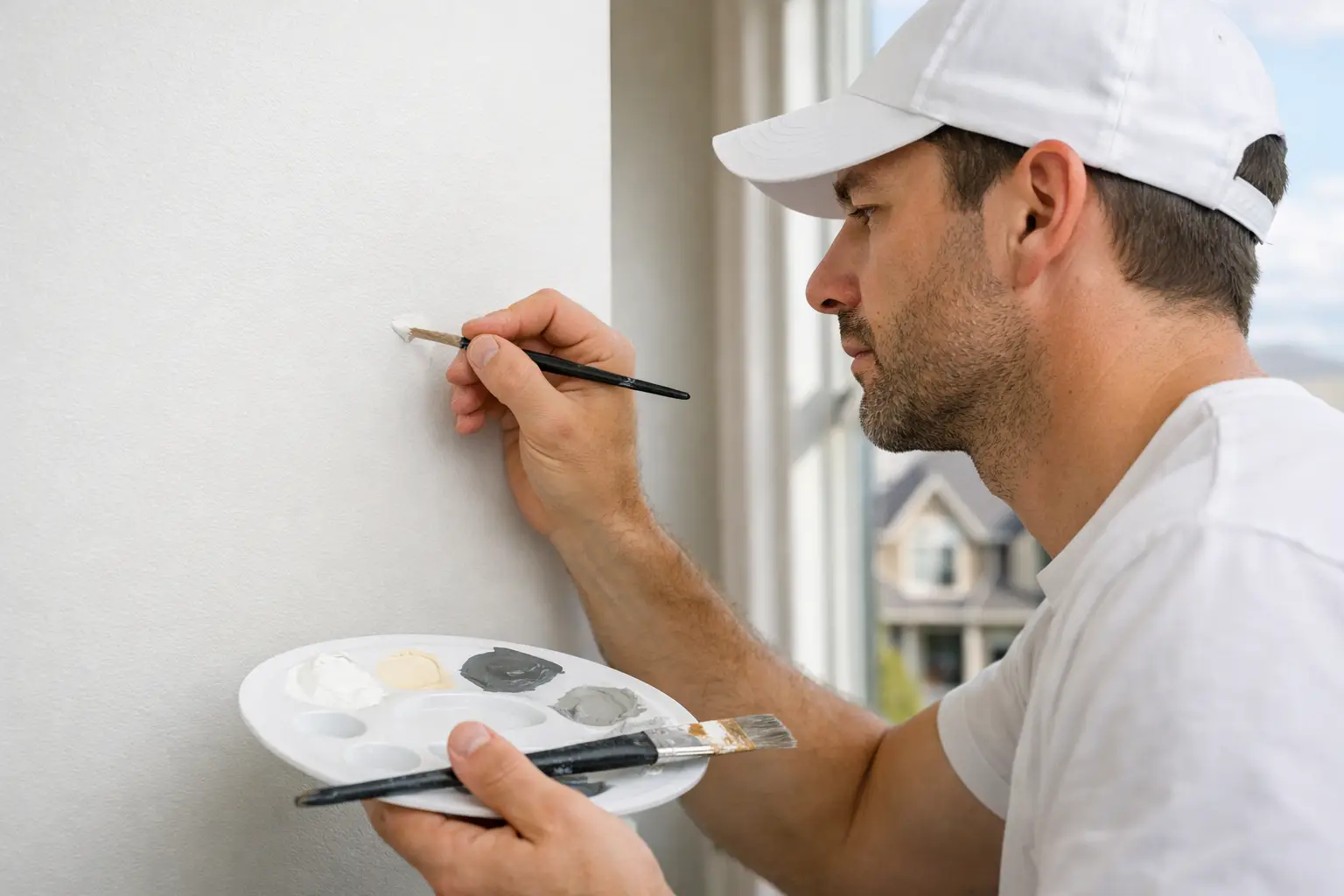
Once the surface is ready, paint is applied using the method that best suits the area and existing finish. Sometimes that means a small brush; other times a mini roller helps recreate the wall texture more naturally. Thin, controlled coats are better than one heavy coat, especially around trim, doors, and patched drywall.
The last part is checking the repair in normal room lighting. Paint can look different when wet, and it can look different again under daylight, warm bulbs, or cool LEDs. Careful work includes a final look for missed edges, drips, debris, or visible transitions before the area is cleaned up.
Common places that benefit from touch-up work
High-traffic areas usually show wear first. Entryways collect scuffs from boots, bags, strollers, and pets. Hallways and stairwells get hand marks and furniture scrapes. Kitchens often have chips around chair rails, cabinet edges, and busy walkways.
Rental properties can benefit from touch-ups between tenants, particularly around door handles, closets, bedrooms, and living room walls. Landlords do not always need a full repaint between every tenancy, but leaving nail holes and marked-up walls unattended can make a unit feel neglected. Targeted repairs can improve presentation while keeping turnover work focused.
Baseboards, door casings, and trim need a slightly different approach than walls. Their harder, glossier paint is durable but less forgiving when touched up. Chips may need light sanding and priming first, and the new coat needs to be applied cleanly without spilling onto nearby flooring or wall paint.
How to prepare before your appointment
A little preparation helps the work move quickly and keeps decisions clear. If you have leftover paint, place it somewhere easy to access and check whether the label is still readable. Let the service provider know which rooms need attention and whether the damage is from regular wear, a recent repair, or a possible leak.
Move small, fragile, or valuable items away from the wall where possible. Large furniture can often be protected and shifted as needed, but clearing the immediate work area saves time. If you are unsure whether a mark will wash off or needs paint, do not aggressively scrub it first. Some wall finishes burnish easily, leaving a shiny patch that still requires painting.
For rental turnovers or pre-sale work, it helps to combine related tasks in one visit. Drywall patching, caulking, door fixes, loose hardware, and paint touch-ups can often be handled together. That means fewer appointments, less disruption, and a home that looks properly finished rather than patched in stages.
Choose service based on the result, not just the smallest quote
For small jobs, homeowners understandably want a straightforward price and a quick booking. Those matter. But the lowest price is not useful if the repair is rushed, the colour mismatch is ignored, or dust and paint splatter are left behind.
Ask what preparation is included, whether minor wall repairs can be handled before painting, and how the work area will be protected. It is also reasonable to ask whether the job is suitable for a spot repair or whether painting a full wall would produce a better finish. Clear advice up front prevents disappointment after the paint dries.
Nestor's Home Help provides practical, owner-operated help for the small repairs that make a home look cared for, including painting touch-ups and the related fixes that often come with them. For Calgary households, landlords, and busy property owners, the goal is simple: show up on time, do careful work, and leave the space tidy.
A fresh touch-up will not solve every paint problem, but it can make a remarkable difference when the damage is small and the preparation is done right. Before you live with that scuffed wall or half-finished patch another week, have it assessed and choose the repair that will look right in your home.
Vitalii Nestorenko is the owner of Nestor's Home Help, a licensed and insured handyman business in Calgary. He holds a Master's degree in mechanical engineering and does every job himself.