Door Repair Calgary: What Needs Fixing Fast
By Vitalii Nestorenko · June 14, 2026 · 7 min read
A door that sticks at 7 a.m., won’t latch at bedtime, or scrapes the floor every time you open it is more than a small annoyance. For many homeowners, renters, and landlords, door repair Calgary jobs start with one simple problem that keeps getting worse - drafts, loose hinges, swelling, sagging, cracked frames, or hardware that just won’t cooperate.
Most door problems do not need a full replacement. They need a careful diagnosis, the right adjustment, and clean workmanship so the fix actually lasts. That matters whether it is a front entry door that no longer seals properly, a bedroom door that will not close, or a rental unit door that needs to work smoothly before the next tenant moves in.
Common door repair Calgary homeowners ask for
The most common service calls are not dramatic. They are practical problems that interrupt daily life. A door rubs against the jamb. The latch misses the strike plate by a few millimetres. The hinges loosen and the slab starts to sag. A handle feels sloppy, a deadbolt stops lining up, or the frame shifts enough that the whole door feels wrong.
Seasonal movement is a big factor in Calgary homes. Dry air, moisture, temperature swings, and normal settling can all affect how a door fits. Wood doors may swell or shrink. Exterior doors can shift just enough to create drafts or security concerns. Interior doors often show problems first because they get opened and closed constantly and small alignment issues become obvious fast.
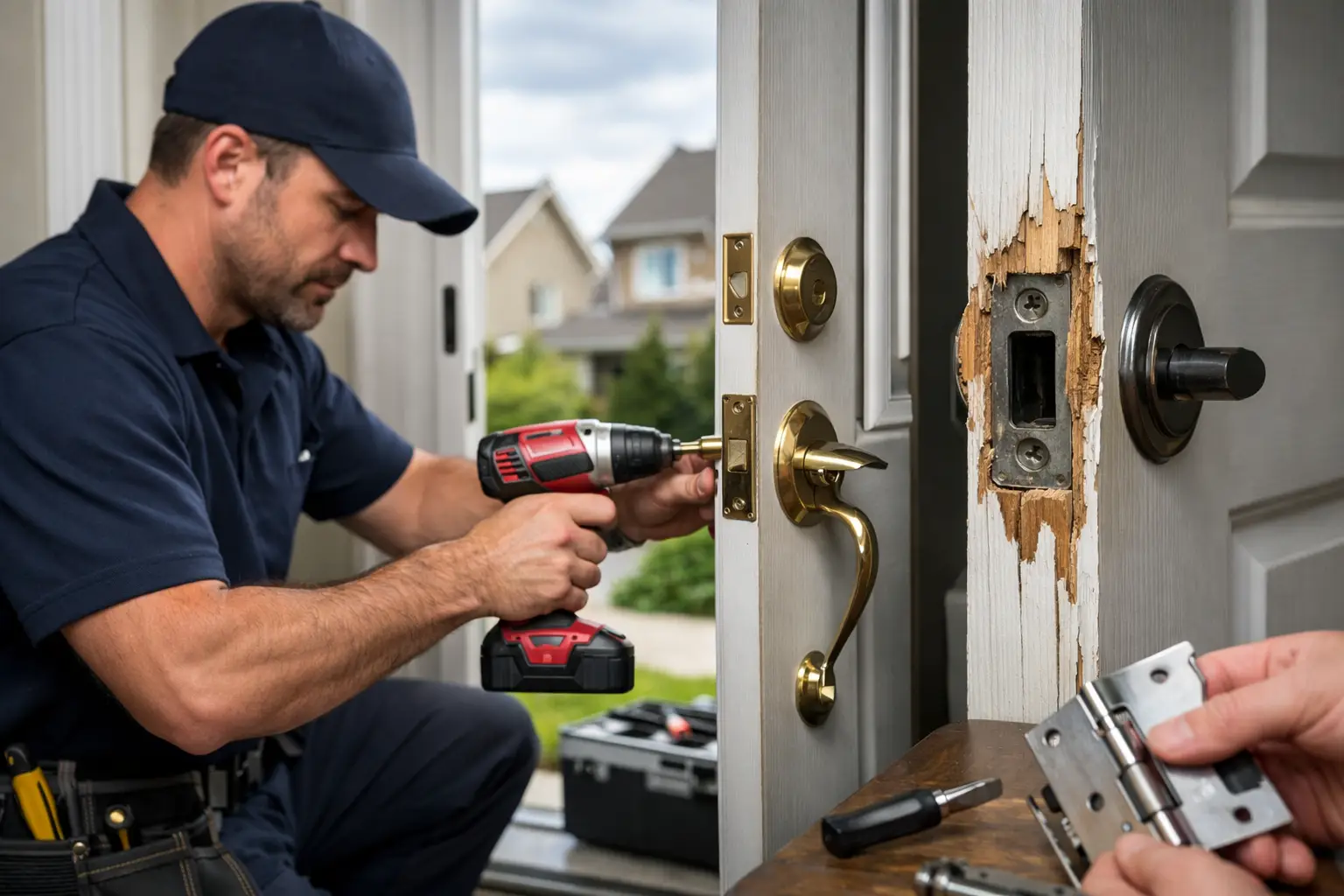
In many cases, the fix is straightforward. Rehanging a sagging door, tightening or replacing hinges, adjusting the strike plate, planing a rubbing edge, or correcting minor frame alignment can restore proper function without overcomplicating the job. The key is knowing whether the problem is with the door slab, the hardware, or the frame itself.
When a door issue needs attention right away
Some door problems can wait a week. Others should be fixed as soon as possible.
A front door that does not lock properly is an immediate concern. The same goes for a door that leaves a visible gap, lets in cold air, or has a damaged frame after forced use or weather exposure. If the door drags heavily on flooring, you can also end up damaging the floor surface every time someone passes through.
For landlords and busy households, there is also the practical side. A bathroom door that will not latch, a bedroom door that won’t close, or a closet door that comes off track creates daily frustration that tends to lead to a bigger repair if it is ignored. A loose hinge screw can eventually strip out the wood. A slight misalignment can turn into a split jamb. What starts as “I can live with it for now” often costs more later.
Repair or replace? It depends on the cause
This is where a lot of people waste money. Not every bad door needs to be replaced, and not every old door is worth repairing.
If the slab is still solid and the issue is alignment, hinge wear, latch placement, or minor swelling, repair usually makes the most sense. It is faster, less disruptive, and more affordable than replacing the whole unit. This is especially true for interior doors, suite doors, and newer exterior doors with decent structure.
Replacement becomes more likely when there is major warping, rot, severe frame damage, broken cores, or long-term water exposure. If the door has already been adjusted multiple times and still does not operate properly, a fresh installation may be the better long-term solution. The right answer depends on condition, not just age.
A good handyman will tell you plainly when a repair is enough and when it is just delaying the inevitable. That honesty matters.
The door problems DIY often makes worse
There is nothing wrong with trying a simple fix if you know exactly what you are dealing with. Tightening a visible loose screw or replacing a basic handle can be reasonable. But a lot of door repairs go sideways because the first diagnosis is wrong.
People often trim the wrong edge when a door rubs. They oversize hinge holes, use the wrong screws, or move hardware without checking alignment through the full swing. Sometimes the latch issue is not the latch at all - it is a sagging top hinge or a frame that has shifted. Other times, the deadbolt problem is caused by seasonal movement and weatherstripping pressure, not a faulty lock.
Exterior doors deserve extra caution. If the seal is poor, the threshold is off, or the lock alignment is compromised, you are dealing with comfort, security, and energy loss all at once. A quick fix that only addresses one part of the problem may leave the main issue untouched.
What a proper repair should include
A solid door repair is not just about making the door close once while someone is standing there. It should open smoothly, latch cleanly, and sit properly in the frame without forcing, scraping, or bouncing back.
That usually starts with inspecting the hinges, jamb, strike plate, latch alignment, frame condition, and door clearance. On exterior doors, weatherstripping, thresholds, and lock function should also be checked. If one part is adjusted, the rest of the system needs to be tested with it. A door is a simple item, but it works as a system.
Clean workmanship matters too. No one wants patched screw holes, chipped trim, or sawdust left across the floor. In occupied homes and rental properties, tidy work is part of professional service. The repair should solve the issue without creating another one beside it.
Interior and exterior doors need different thinking
Interior doors are usually about function, privacy, and fit. They need to swing properly, stay latched, and avoid damage to walls and flooring. Repairs are often centred on hinges, handles, latch alignment, or minor trimming.
Exterior doors involve more variables. Security is the obvious one, but insulation and weather resistance are just as important. A front or side entry door that looks mostly fine can still leak air badly if the alignment is off. In a Calgary winter, that becomes noticeable in a hurry.
Patio and side doors can also develop issues from heavier use, settlement, or exposure to moisture. In those cases, the repair may involve a mix of hardware adjustment and frame correction. It is rarely wise to guess.
Why fast, small-job service matters
A lot of door problems fall into the category of “too small for a contractor, too important to ignore.” That is exactly where homeowners get stuck. They do not need a full renovation crew. They need someone who can show up, identify the issue quickly, and fix it properly.
That is why owner-operated handyman service works well for this kind of job. You get one accountable person, practical recommendations, and a repair approach based on what your home actually needs. Not every job requires a specialist trade and not every household has time to chase multiple quotes for a sticking bedroom door or a front entry that no longer lines up.
For property managers, landlords, and busy families, speed matters almost as much as the repair itself. If the issue can be handled same day or on the next available visit, the stress drops immediately. That convenience is part of the value.
Choosing the right help for door repair Calgary service
If you are hiring someone for door repair Calgary work, look for a service that is licensed, insured, clear about pricing, and comfortable with smaller residential repairs. Ask whether they handle adjustments, hardware replacement, rehanging, door installation, and frame-related fixes. That range matters because many door issues overlap.
You also want someone who respects your space. Punctuality, clean work, and straightforward communication are not extras. They are part of the job. A good repair experience should feel easy from booking to cleanup.
Nestor’s Home Help is built around exactly that kind of practical service - fast help, honest workmanship, and repairs handled with care inside lived-in homes.
A few signs not to ignore
If your door suddenly starts behaving differently, trust that change. A new sticking point, a latch that just stopped lining up, a visible gap at the edge, or a lock that needs extra force usually means something shifted. Doors do not fix themselves, and repeated force tends to make the repair larger.
The good news is that many of these issues are very repairable when caught early. A well-done adjustment can restore smooth operation, protect your hardware, and save you from paying for a replacement you never really needed.
If a door in your home is scraping, sagging, sticking, or refusing to lock the way it should, the best next step is simple - get it looked at before a minor repair turns into a bigger one.
Vitalii Nestorenko is the owner of Nestor's Home Help, a licensed and insured handyman business in Calgary. He holds a Master's degree in mechanical engineering and does every job himself.