Vinyl Plank Floor Repair That Lasts
By Vitalii Nestorenko · June 17, 2026 · 7 min read
A floor can look fine one day, then catch your sock, lift at a seam, or show a gouge right in the middle of the room. That is usually when homeowners start searching for vinyl plank floor repair and realize there is a big difference between a quick patch and a fix that actually holds up.
Vinyl plank flooring is popular for good reason. It is durable, easier on the budget than hardwood, and works well in busy homes. But like any floor, it can get damaged by shifting furniture, moisture, poor installation, heavy traffic, or a dropped tool at exactly the wrong angle. The right repair depends on what failed, why it failed, and whether the surrounding planks are still sound.
When vinyl plank floor repair makes sense
Not every damaged floor needs a full replacement. In many cases, a local repair is the smarter option, especially if the rest of the floor is in good shape and you want to avoid tearing up a whole room.
A single scratched or chipped plank can often be repaired or replaced without touching the rest of the floor. Minor seam separation may also be fixable if the locking system is still intact and the subfloor underneath has not shifted. Small edge damage near a doorway or under a chair can sometimes be dealt with quickly before it spreads.
Where people get into trouble is assuming every issue is cosmetic. If planks are lifting, rocking underfoot, or repeatedly separating after being pushed back together, there is usually a deeper cause. That could mean a low spot in the subfloor, expansion problems around the perimeter, water damage, or broken click-lock edges. In those cases, repairing the visible problem without correcting the cause usually turns into a repeat job.
The most common types of damage
Scratches and surface scuffs are the least serious. Many can be improved with a manufacturer-approved repair product or a colour-matched filler, though deep damage is harder to hide completely. If the wear layer is cut through, the repair may reduce the appearance but not make it disappear.
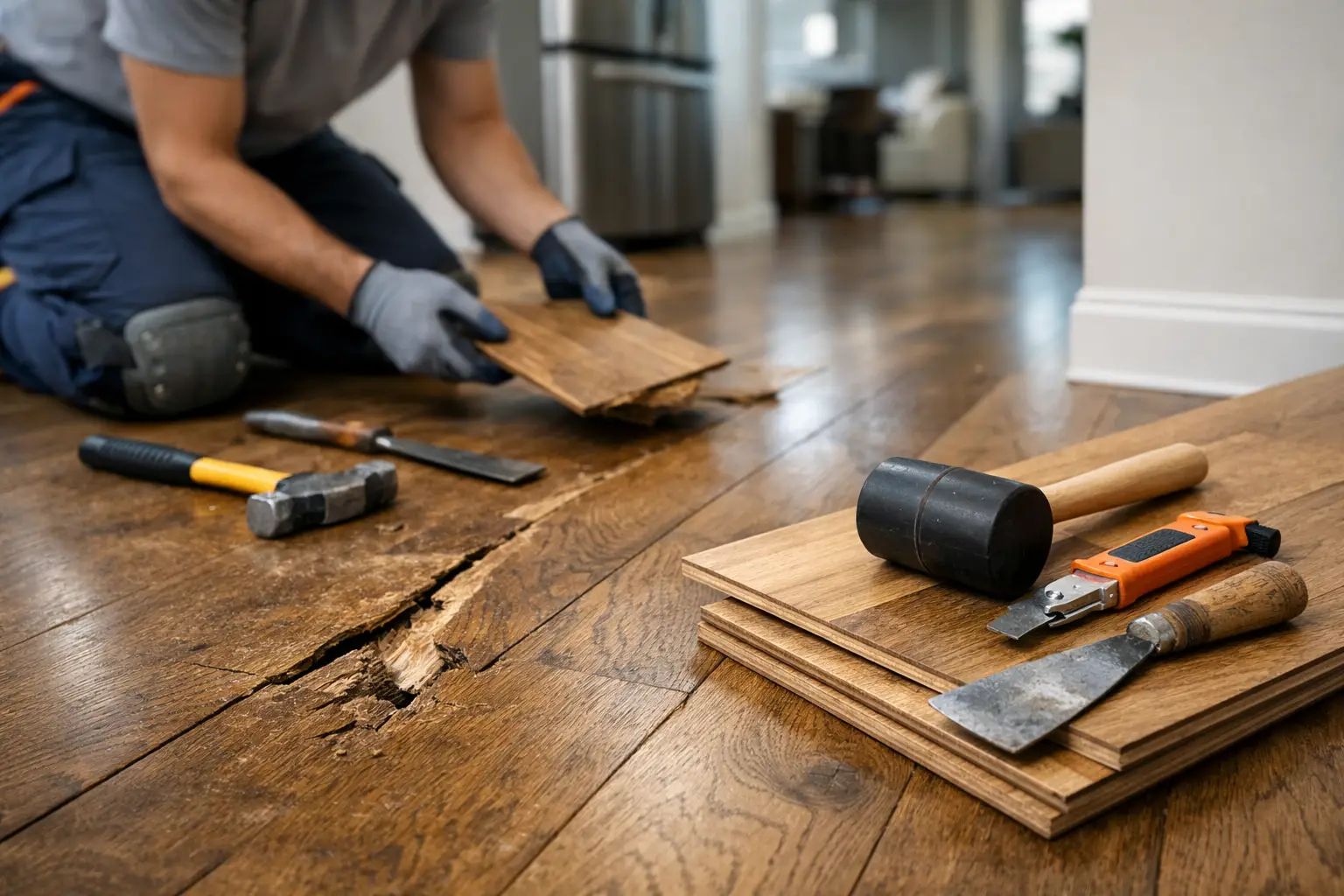
Gouges, chips, and punctures are more noticeable and often happen when heavy furniture is dragged instead of lifted. If the damage is isolated to one plank, replacement is often cleaner than trying to fill a large void in a high-traffic area.
Separated joints are common in floating floors. Sometimes the plank simply worked loose. Other times, the tongue or groove has been damaged, or the floor did not have enough room to expand and contract. If a gap keeps coming back, forcing it closed is not a real fix.
Buckling or lifting is more serious. That often points to moisture, pressure from tight perimeter installation, or movement in the subfloor. In a bathroom, kitchen, or entry area, it is worth checking whether water got below the floor. Once the core of the plank is compromised, the repair options narrow fast.
Repair or replace? It depends on the floor and the damage
This is where practical judgment matters. A floor with one damaged plank near the edge of the room is a very different job from a floor with multiple failed seams in the centre.
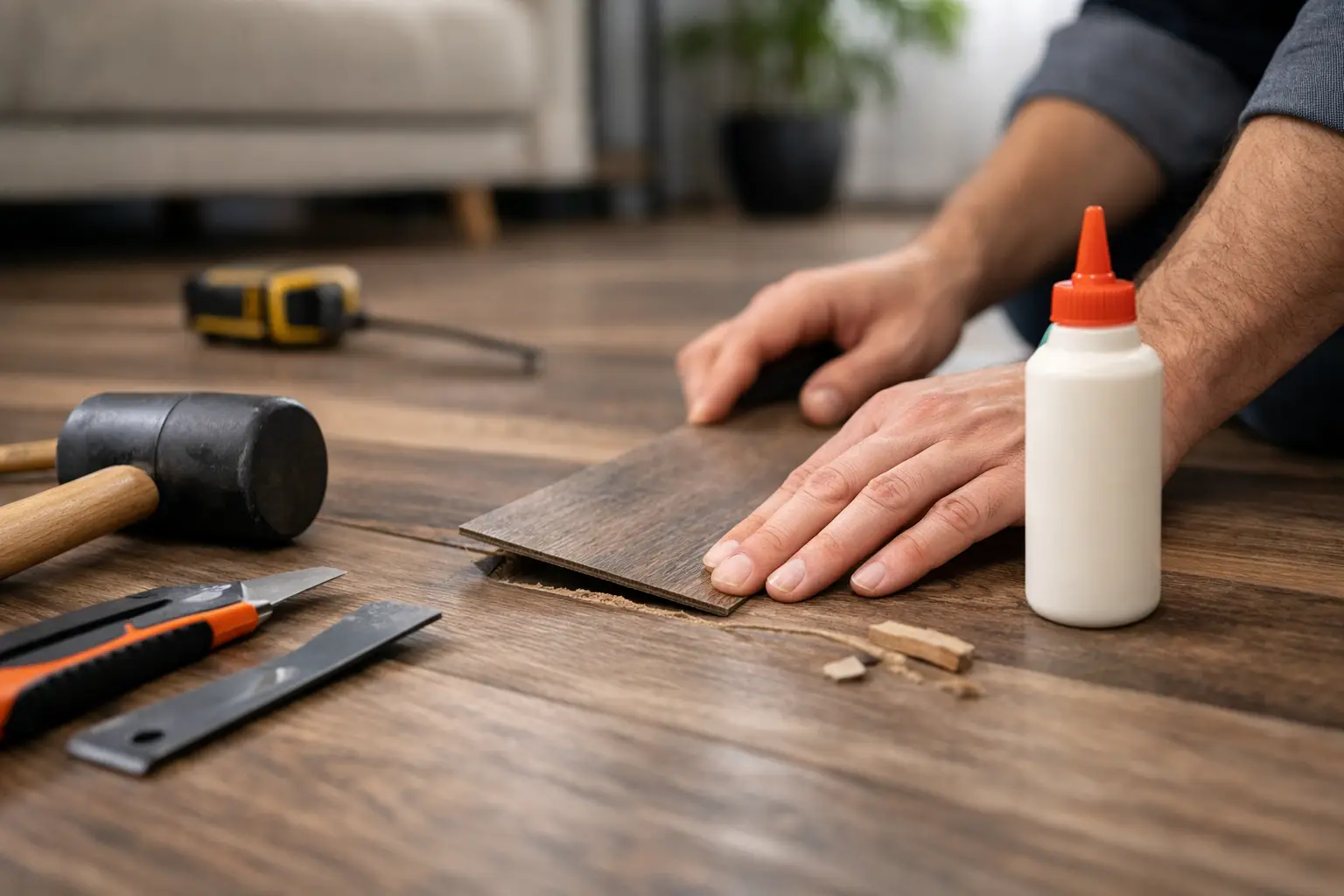
If the floor is still relatively new, and you have matching material left over, replacing one or two planks is often the best-value option. The result usually looks better than trying to camouflage major damage.
If the floor is older, sun-faded, or made from a discontinued product, replacement gets trickier. Even if you still have spare planks, the colour may no longer match the installed floor exactly. In that case, a repair may be acceptable in a closet or low-visibility area, while a living room repair may stand out more than expected.
There is also the question of access. Some vinyl plank floors can be disassembled from the nearest wall to reach the damaged area. Others need a more surgical plank replacement in place. That kind of work takes care, especially with click-lock systems, because it is easy to damage neighbouring planks if the wrong method is used.
What a solid vinyl plank floor repair should address
A good repair is not just about making the damage less visible. It should restore stability, protect the surrounding floor, and prevent the same problem from returning.
That means checking the subfloor for flatness and movement, looking at expansion gaps around the perimeter, and inspecting nearby planks for hidden damage. If moisture is part of the story, that needs attention first. A floor repaired over a damp subfloor is usually a temporary win.
It also means choosing a repair method that matches the floor type. Glue-down vinyl plank and floating vinyl plank do not fail the same way and should not be repaired the same way. What works on one can make a bigger mess on the other.
When DIY works and when it usually does not
Some homeowners can handle small cosmetic touch-ups. A light scuff, a minor mark, or a tiny edge chip in a low-traffic corner may be manageable if you have the right material and a steady hand.
The line gets crossed when the repair involves removing trim, unlocking rows, cutting out a damaged plank, or dealing with lifting sections. That is where DIY mistakes become expensive. Planks crack, edges snap, trim gets damaged, and a one-plank issue turns into six. A rushed repair can also void flooring warranties if the manufacturer requires specific methods.
If you are in a rental unit or managing a turnover, speed matters too. A proper repair done once is usually cheaper than a temporary fix followed by a call when the tenant notices the floor lifting again.
Signs you should call for help sooner
If the floor feels soft or hollow in one spot, if planks are clicking underfoot, or if gaps keep reopening, it is worth having someone look at it before more planks get damaged. The same goes for visible swelling, water exposure, or damage near appliances, sinks, tubs, and exterior doors.
In Calgary homes, seasonal movement can also expose installation issues that were hiding for months. Dry conditions, temperature swings, and heavy winter moisture near entrances can all affect how a vinyl plank floor performs. That does not mean the product is bad. It means the repair should take the real conditions of the home into account.
What to expect from a professional repair
A proper service visit should start with diagnosis, not guesswork. The goal is to find out whether the issue is limited to one plank, one section, or something underneath the floor.
From there, the repair may involve re-seating separated planks, replacing damaged pieces, adjusting transitions, or removing a small section to correct a base issue. In some cases, a straightforward repair is all that is needed. In others, the honest answer is that a patch will not hold and a larger section should be redone.
That kind of honesty matters. No homeowner wants to pay for a neat-looking repair only to find the floor opening up again a few weeks later.
Nestor's Home Help handles these smaller but important repair jobs the way they should be handled - carefully, cleanly, and with attention to what caused the problem in the first place.
How to protect the floor after the repair
Once the floor is fixed, a few simple habits make a real difference. Felt pads under furniture help prevent fresh gouges. Entry mats reduce grit and winter moisture. Office chairs need the right wheels or a protective mat. Spills should be cleaned up quickly, even on water-resistant flooring.
If you are replacing appliances or moving furniture, lift instead of dragging whenever possible. A vinyl plank floor is durable, but point pressure and rough movement can still do damage fast.
It also helps to keep a few spare planks if you have them. Matching material can save time, money, and frustration later, especially if the original product gets discontinued.
The smart approach to vinyl plank floor repair
The best repair is the one that fits the actual problem, not just the visible mark on the surface. Sometimes that means a simple plank replacement. Sometimes it means correcting an installation issue before the floor gets worse. And sometimes the most cost-effective choice is dealing with a small problem now instead of waiting until it spreads across half the room.
If your floor is lifting, separating, scratched deeply, or damaged by moisture, do not wait for it to sort itself out. Floors rarely do. A timely repair keeps the space safer, cleaner, and easier to live with - and it saves you from paying for a bigger fix later.
Vitalii Nestorenko is the owner of Nestor's Home Help, a licensed and insured handyman business in Calgary. He holds a Master's degree in mechanical engineering and does every job himself.