How to Fix Sagging Doors Without Making It Worse
By Vitalii Nestorenko · September 8, 2026 · 6 min read
A door that scrapes the floor, catches on the frame, or will not latch properly can make a perfectly good room feel neglected. The good news is that most homeowners can learn how to fix sagging doors without replacing the whole door. The key is finding out whether the problem is loose hardware, a shifting frame, seasonal movement, or a damaged hinge before making an adjustment.
A small repair done in the right place can restore a smooth, quiet close in minutes. A repair done in the wrong place - such as planing the bottom edge of a door that only needs one hinge screw tightened - can create a bigger and more expensive problem.
First, find out why the door is sagging
Open the door halfway and look at the gap around all four sides. A consistent gap usually means the door and frame are in good shape. If the gap is narrow at the top on the latch side and wider at the bottom, the door has likely dropped at the hinge side. This is the most common pattern with interior and exterior doors.
Check whether the door rubs at the top corner near the latch, drags along the floor, or hits the strike plate too low. Those clues point to different causes. A door that has gradually become harder to close often has loose hinge screws. One that changes with Calgary’s dry winters, humid days, or a sudden temperature swing may be reacting to normal wood movement. A door that started sticking after a renovation, water leak, or visible wall crack needs a closer look at the frame and structure.
Before you start, gather a screwdriver or drill, replacement screws, a level, wood shims, and a utility knife. Keep a pencil handy too. Marking where the door rubs is more reliable than trying to remember the exact contact point after several adjustments.
How to fix sagging doors with loose hinge screws
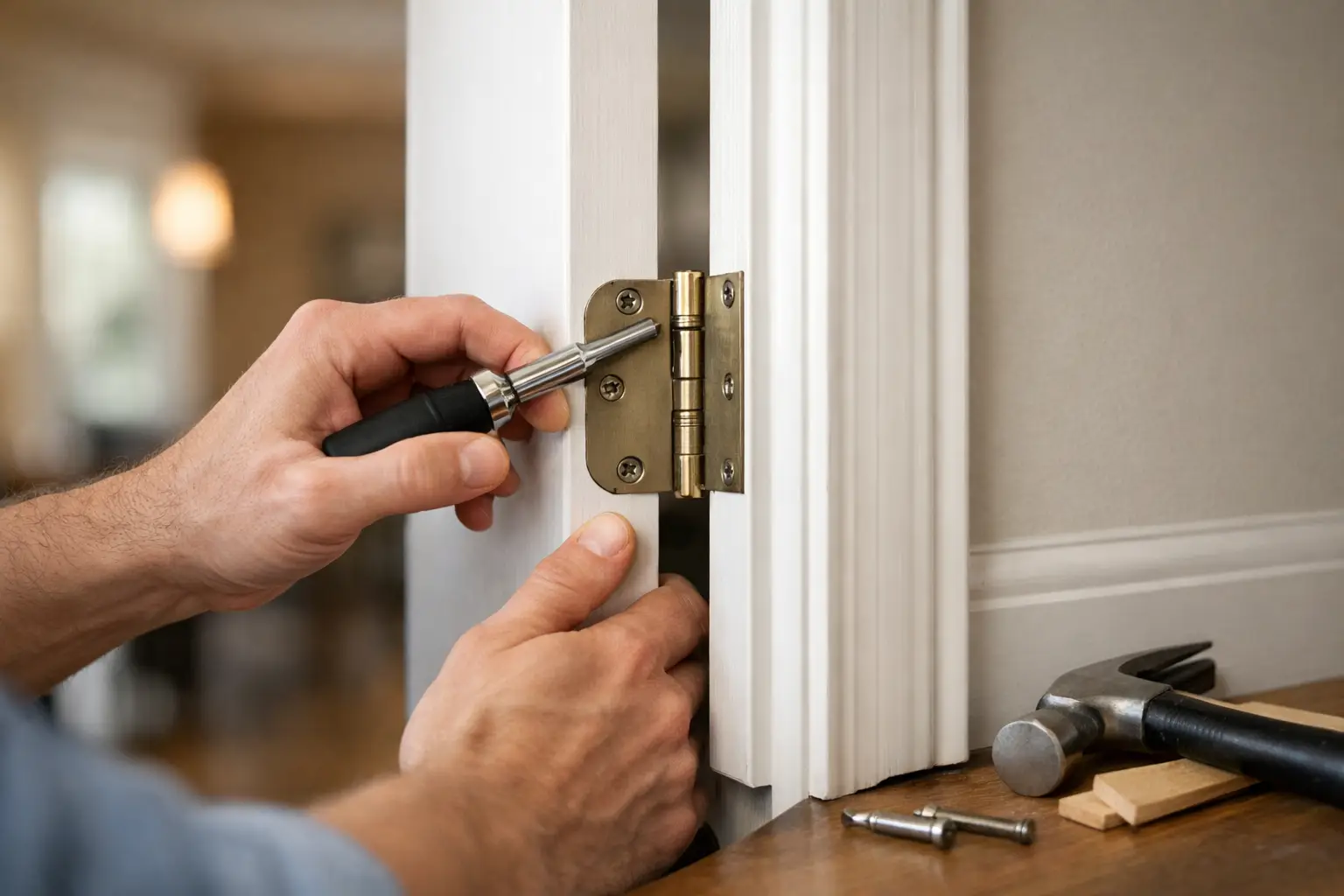
Start with the simplest repair: tighten every screw in each hinge. Work with the door closed or supported from underneath so its weight is not pulling against the screws while you tighten them. Check the top hinge first. It carries a great deal of the door’s weight and is usually where sagging begins.
If a screw spins but will not tighten, the screw hole in the jamb is stripped. Do not keep forcing it. Remove the loose screw and insert a few wood slivers coated with carpenter’s glue into the hole. Toothpicks can work for a light interior door, but wood dowels or proper wood plugs make a stronger repair. Trim the filler flush once the glue has set, drill a small pilot hole, then reinstall the screw.
For a heavier solid-core or exterior door, replacing one or two short screws in the top hinge with longer screws can make a major difference. A properly sized long screw can pass through the jamb and anchor into the framing behind it, pulling the hinge side back into position. Choose screws that match the hinge finish where possible, and make sure they are long enough to reach solid framing without creating a hazard on the other side of the wall.
Tighten gradually and test the door after each adjustment. Pulling the jamb too aggressively can distort the reveal around the door or cause the latch to miss the strike plate in the opposite direction.
Check for worn or bent hinges
If the screws are secure but the door still droops, inspect the hinge knuckles and hinge leaves. Excessive side-to-side play, bent metal, missing hinge pins, or loose screws on the door itself can all cause a sagging appearance.
Replacing a damaged hinge is usually straightforward, but choose a replacement with the same size, corner shape, and screw-hole pattern. Replace one hinge at a time so the door stays supported and aligned. If you are changing all hinges, support the door with wedges or have someone hold it steady while you work.
Adjust the strike plate after fixing the sag
Many people adjust the strike plate first because the latch is not catching. That can help in a few situations, but it should not be the first move when the door is visibly sagging. The strike plate is only the symptom if the hinge side has dropped.
Once the hinges are secure, close the door slowly and see where the latch meets the strike plate. If it is only slightly high or low, loosen the strike plate screws and reposition it if the existing holes allow. You may need to enlarge the opening in the jamb slightly with a file or chisel, then reinstall the plate firmly.
If the latch is more than a few millimetres out of position, revisit the hinges and frame rather than cutting a large new opening. An oversized strike opening can make a door feel loose, reduce privacy, and leave a poor-looking repair.
When the door frame is the problem
Not every sagging door is a hinge problem. Look for a jamb that has separated from the wall, cracked trim, loose casing, or a visible gap between the frame and drywall. These signs can mean the frame has shifted or was not secured well during installation.
A level placed against the hinge jamb and head jamb can help confirm whether the frame is out of plumb or square. Correcting it may involve removing trim, adding shims behind the jamb, and fastening the frame back to the rough opening. This is more involved than tightening screws because the door needs to remain square while the gaps stay even around its edges.
Exterior doors deserve extra care. Their frames are tied to weatherstripping, thresholds, locks, and exterior sealing. An adjustment that improves the swing but leaves a gap around the weatherstripping can let in drafts and moisture. If an exterior door has a shifting frame, water staining, rot, or a soft threshold, it is worth having the full opening assessed before doing a cosmetic fix.
Do not plane or sand the door too early
Trimming the door edge is sometimes the right solution, particularly when a wood door has expanded or a new floor has reduced clearance. It is not a first-line repair for a sagging door, though.
If you plane the bottom or latch edge before correcting loose hinges, the door may end up with an uneven gap once the hinges are repaired. You can also cut through paint, veneer, or an exterior door’s protective finish. When trimming is truly needed, remove a small amount at a time, keep the edge square, and reseal any bare wood immediately. Exterior doors need paint or a suitable finish on every exposed edge to prevent moisture from entering the wood.
For renters, avoid planing, drilling into the frame, or changing hinge hardware without landlord approval. Take clear photos of the gaps and latch alignment first. A sagging door can be normal wear, but damage to a fire-rated suite entry door or building door should be handled by the property owner or qualified service professional.
Signs you should book a door repair instead
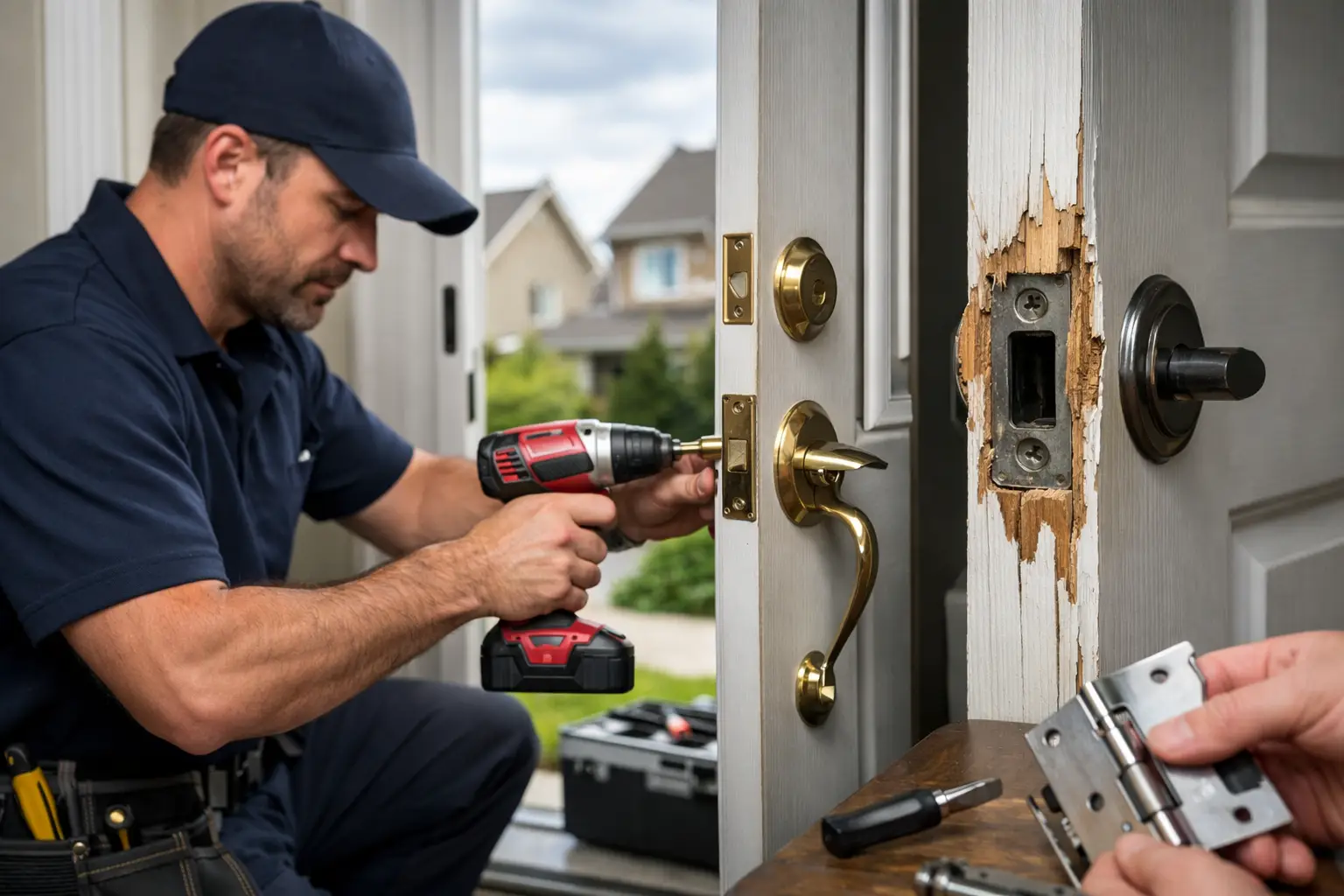
A handyman repair is often the safer choice when the door is heavy, the frame is loose, or several adjustments have not solved the issue. It is also wise to get help if the door is an exterior entry door, a fire-rated door, or one with a multipoint lock system. These doors need proper alignment for security, weather protection, and safe operation.
Watch for recurring sagging after you tighten the hinges. Repeated movement can point to stripped framing, a warped door slab, deteriorated wood around the jamb, or foundation and structural movement. A quick repair may still be possible, but the cause needs to be addressed so you are not repeating the same job every season.
For homeowners, landlords, and busy households in Calgary, Nestor’s Home Help can assess the hinge, jamb, latch, and door clearance in one visit, then make the repair cleanly and properly. That is often faster than buying several parts and discovering the issue was not the hinge after all.
A door should close with a gentle push, latch without lifting the handle or shoulder-checking it, and leave even gaps around the frame. If yours does not, start with the hinges, make one controlled adjustment at a time, and stop before a small alignment issue turns into a door that needs replacement.
Vitalii Nestorenko is the owner of Nestor's Home Help, a licensed and insured handyman business in Calgary. He holds a Master's degree in mechanical engineering and does every job himself.