Fence Repair vs Replacement: Which Pays Off?
By Vitalii Nestorenko · October 24, 2026 · 6 min read
A fence can look like a small problem until the first strong Calgary wind pushes a loose panel into the neighbour’s yard. When deciding on fence repair vs replacement, the right choice comes down to more than appearance. You need to know whether the fence is still structurally sound, whether repairs will last, and whether putting money into an aging fence is really the best value.
A few loose boards can usually be fixed quickly. A fence with widespread rot, leaning posts, and repeated failures may be telling you it is time to stop patching and start over. The goal is not always the cheapest job today. It is a safe, tidy result that protects your yard and avoids another repair call a few months from now.
Start With the Posts, Not the Boards
Fence boards are the most visible part of a fence, but posts do the real work. A cracked picket or weathered panel may look rough while the structure underneath remains solid. In that case, a targeted repair can restore the fence without the cost and disruption of rebuilding everything.
Check whether the posts are straight, firm in the ground, and free from rot near the soil line. Push gently against the fence in several areas. Some movement is normal, especially on a long run, but a post that rocks easily or leans noticeably has lost support. Replacing a few failed posts can be practical if the rest of the fence is in good condition.
When multiple posts are loose, rotted, or shifting, repairs become harder to justify. New boards attached to weak posts will not solve the underlying problem. The fence may look better for a short time, but it will still be vulnerable when wind, snow, or a heavy gate puts pressure on it.
When Fence Repair Is the Smart Choice
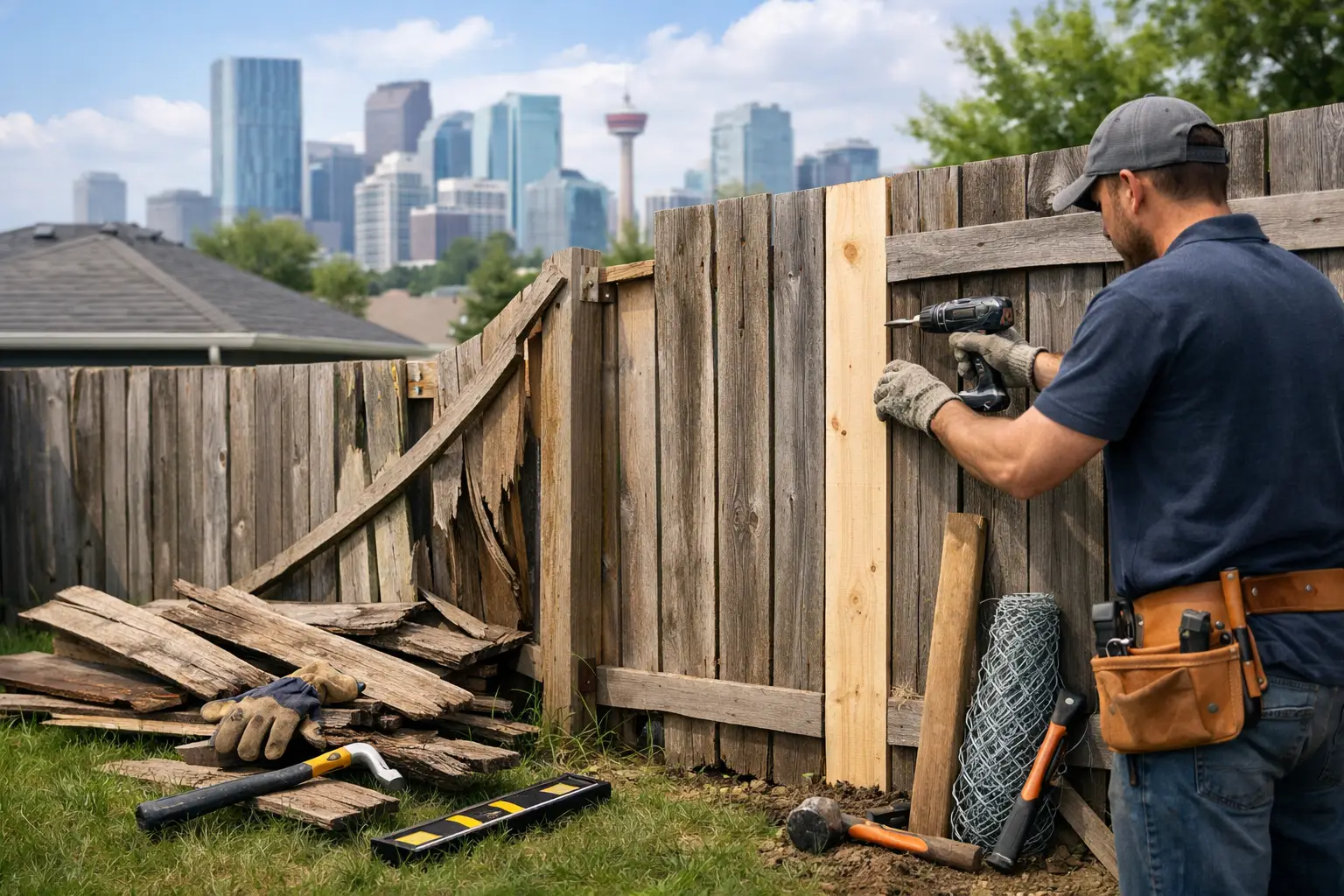
Repair is usually the best option when the damage is local and the fence still has plenty of useful life left. This is common after a storm, a fallen branch, normal gate wear, or an accidental bump from lawn equipment.
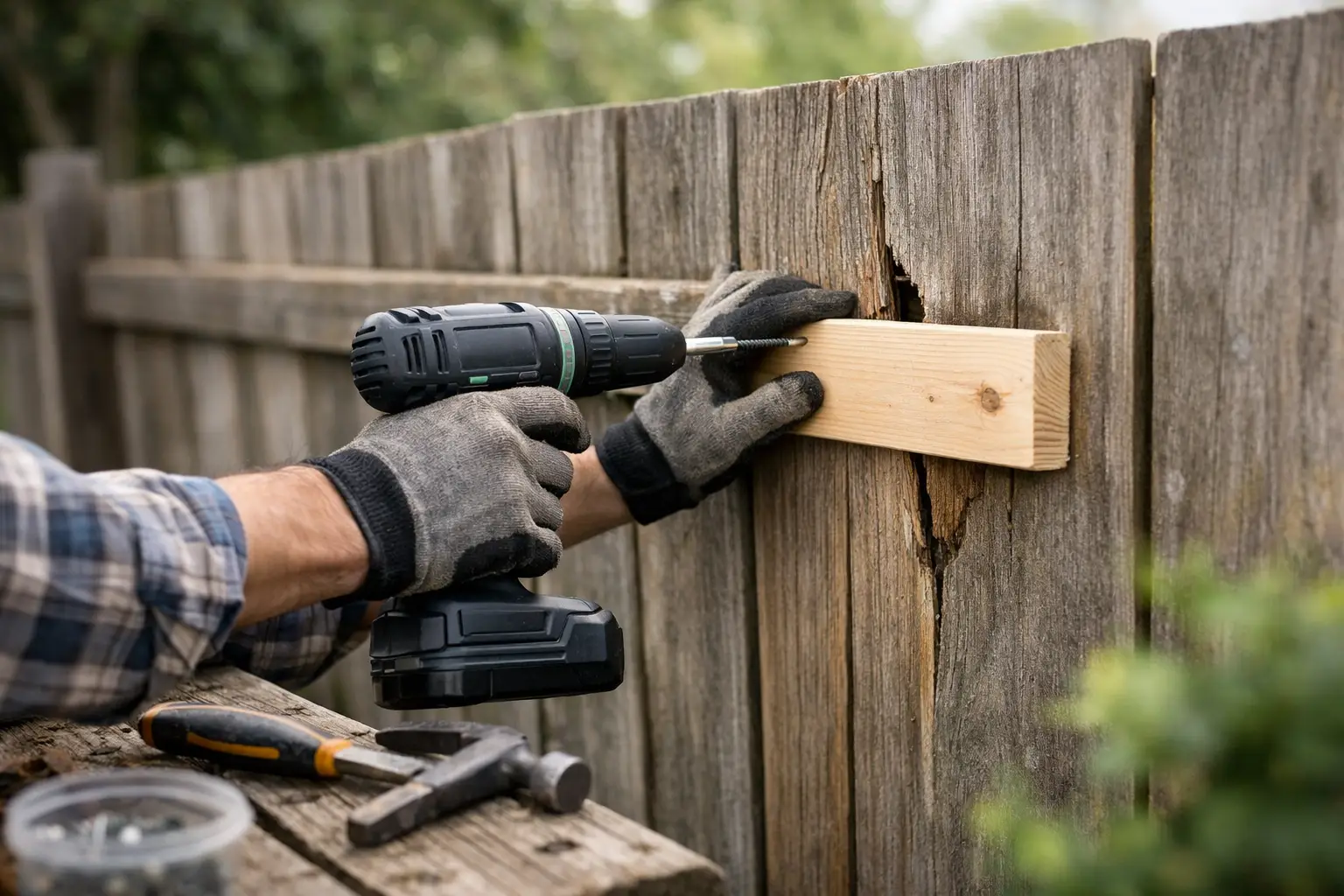
A repair often makes sense when you are dealing with one damaged panel, a handful of loose or split boards, a sagging gate, minor rail damage, or one failed post. It can also be a good choice for rental properties where you need to restore safety and appearance quickly without taking on a full replacement project.
The key question is whether the repaired area can connect securely to the existing fence. If the surrounding lumber is solid and the posts are stable, replacing boards or rails can produce a clean, dependable result. Matching the wood profile, board spacing, and stain colour may take some care, but the structure itself does not need to be disturbed.
Repair can also be the right call when a fence is relatively new but was poorly installed in one spot. For example, a gate that drags may need hinge adjustment, a latch repair, or reinforcement at the gate post. That is a much different situation from a gate that sags because the entire fence line is settling.
Signs Replacement Will Save You Money
There is a point where repeated repairs become false savings. If every season brings another loose panel, rotten post, or broken rail, you may be paying for temporary fixes instead of a lasting solution.
Replacement is worth serious consideration when damage is spread across most of the fence line. This includes widespread rot, many cracked or warped boards, recurring leaning, extensive insect damage, and several posts that have failed at ground level. A fence that is nearing the end of its expected lifespan may not have enough sound material left to support meaningful repairs.
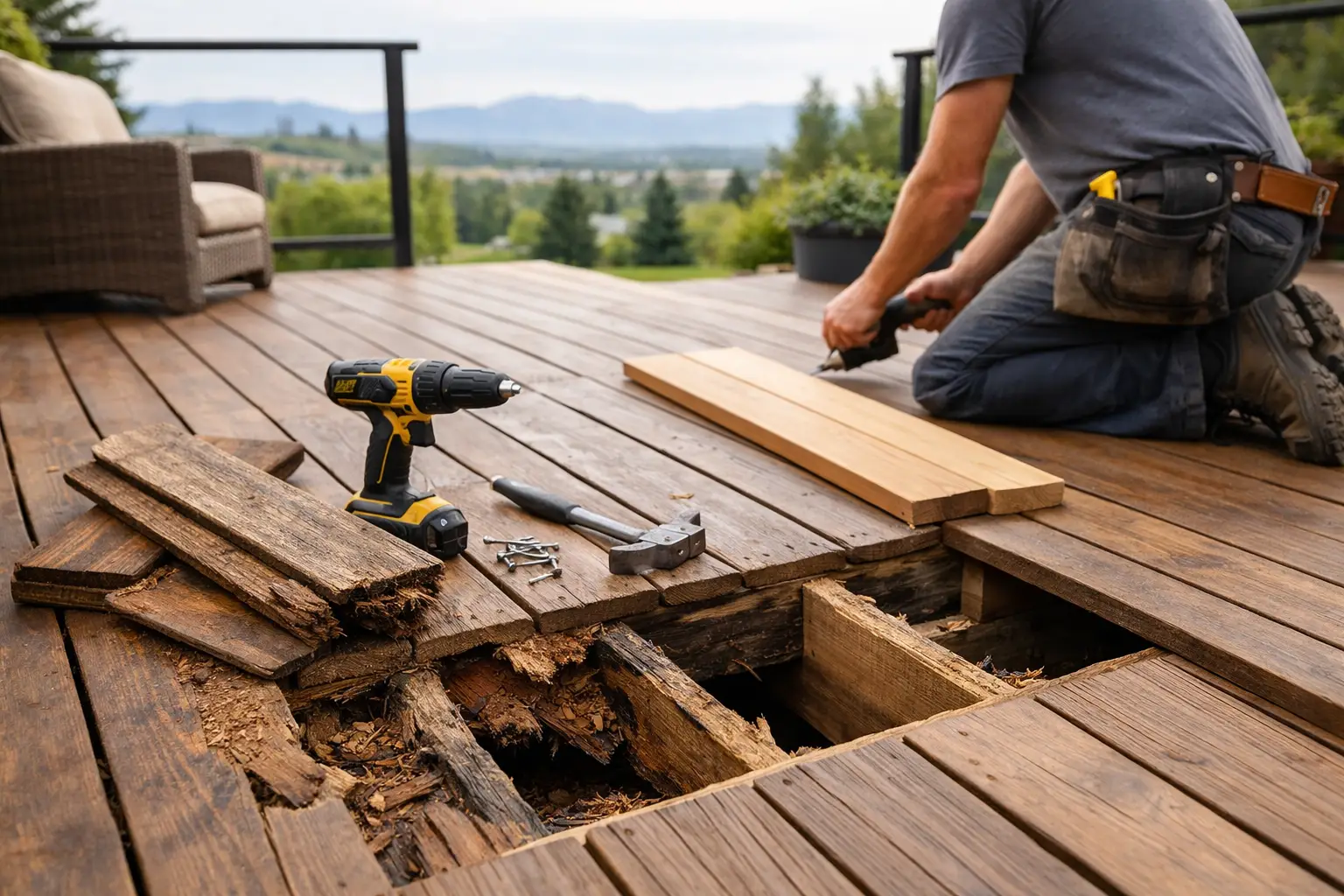
Look closely at the lower portion of wood posts and boards. Moisture collects near the ground, and rot often starts there before it becomes obvious from a distance. If you can press a screwdriver into soft wood, or if sections crumble when touched, the material has lost strength. Surface staining can often be cleaned or sealed. Soft, decayed lumber cannot be made structurally sound with paint or stain.
Replacement may also be the better choice if you want to change the layout. Adding privacy, moving a gate, correcting an uneven property line, or replacing a short fence with a taller design can turn a repair project into a rebuild. In those cases, putting money into the old configuration may not make sense.
Fence Repair vs Replacement: Compare the Real Costs
The lowest quote is not always the lowest cost. A small repair is naturally less expensive than a full replacement, but it should also last long enough to be worthwhile. If a repair buys you several reliable years, it can be excellent value. If it only delays major work until the next windstorm, replacement may be the more economical decision.
Consider labour, materials, disposal, and how much of the fence will need attention next. A single post replacement may require removing panels, digging out old concrete, setting a new post, and reconnecting the fence. That can be worthwhile for one isolated failure. Doing the same process repeatedly across an aging fence adds up quickly.
A full replacement has a higher upfront cost because it involves demolition, debris removal, new posts, rails, boards, fasteners, and installation. It also gives you a fresh, consistent structure with fewer weak points and a longer runway before major maintenance is needed.
For landlords and busy homeowners, there is another cost to consider: time. A fence that keeps failing can lead to tenant concerns, neighbour complaints, safety worries, and repeated appointments. One well-planned replacement may be less stressful than managing several small repairs over the next two years.
Safety and Neighbour Considerations
A damaged fence can become more than a cosmetic issue. Loose panels can fall, exposed nails can cause injuries, and a gate that will not latch can create problems for children, pets, or property access. If the fence borders a pool, alley, school route, or busy sidewalk, prompt action matters even more.
If the fence sits on a shared property line, speak with your neighbour before starting major work. Confirm the boundary, discuss the fence style and height, and keep the conversation practical. Clear communication before demolition is much easier than sorting out concerns after new posts are already in the ground.
For Calgary properties, it is also wise to consider wind exposure and drainage. A solid privacy fence catches more wind than an open design, and poorly drained soil can shorten the life of posts. Proper post depth, secure concrete setting, and thoughtful gate placement help a new or repaired fence stand up to local conditions.
A Simple Way to Make the Decision
Walk the entire fence line rather than judging the worst-looking section alone. Check each post, rail, panel, and gate. Take note of damage that is isolated versus damage that repeats throughout the yard.
Repair is usually appropriate when the fence is stable and the damage is limited. Replacement is more sensible when the structure is failing in several places, repairs are becoming frequent, or you want a different layout or level of privacy. If you are unsure, an experienced handyman can assess the condition honestly and explain what can be fixed safely versus what is likely to fail next.
A good fence job should leave your yard secure, your gate working properly, and the work area clean when it is done. Nestor’s Home Help can help Calgary-area homeowners with practical fence repairs, damaged panels, gate adjustments, post issues, and debris removal so you can make a clear decision without guessing. Fix the small issue while it is still small, but do not keep patching a fence that has already reached the end of its working life.
Vitalii Nestorenko is the owner of Nestor's Home Help, a licensed and insured handyman business in Calgary. He holds a Master's degree in mechanical engineering and does every job himself.