Drywall Repair Calgary Homeowners Can Trust
By Vitalii Nestorenko · September 4, 2026 · 6 min read
A door knob through the wall, a popped screw beside a window, a water stain on the ceiling - drywall damage has a way of making an otherwise well-kept home look unfinished. For drywall repair Calgary homeowners need done properly, the goal is not simply to cover the hole. It is to restore a smooth, solid surface that blends into the surrounding wall and is ready for paint.
Small damage can often be repaired quickly. Larger holes, recurring cracks, damp drywall, or damaged ceiling sections need a closer look before anyone starts patching. Knowing the difference helps you avoid paying twice for a repair that should have been handled properly the first time.
What Kind of Drywall Damage Can Be Repaired?
Most everyday wall damage is repairable without replacing an entire room of drywall. Nail holes from artwork, dents from furniture moves, loose drywall tape, scuffs, corner damage, and small to medium holes are common service calls in homes, condos, and rental properties.
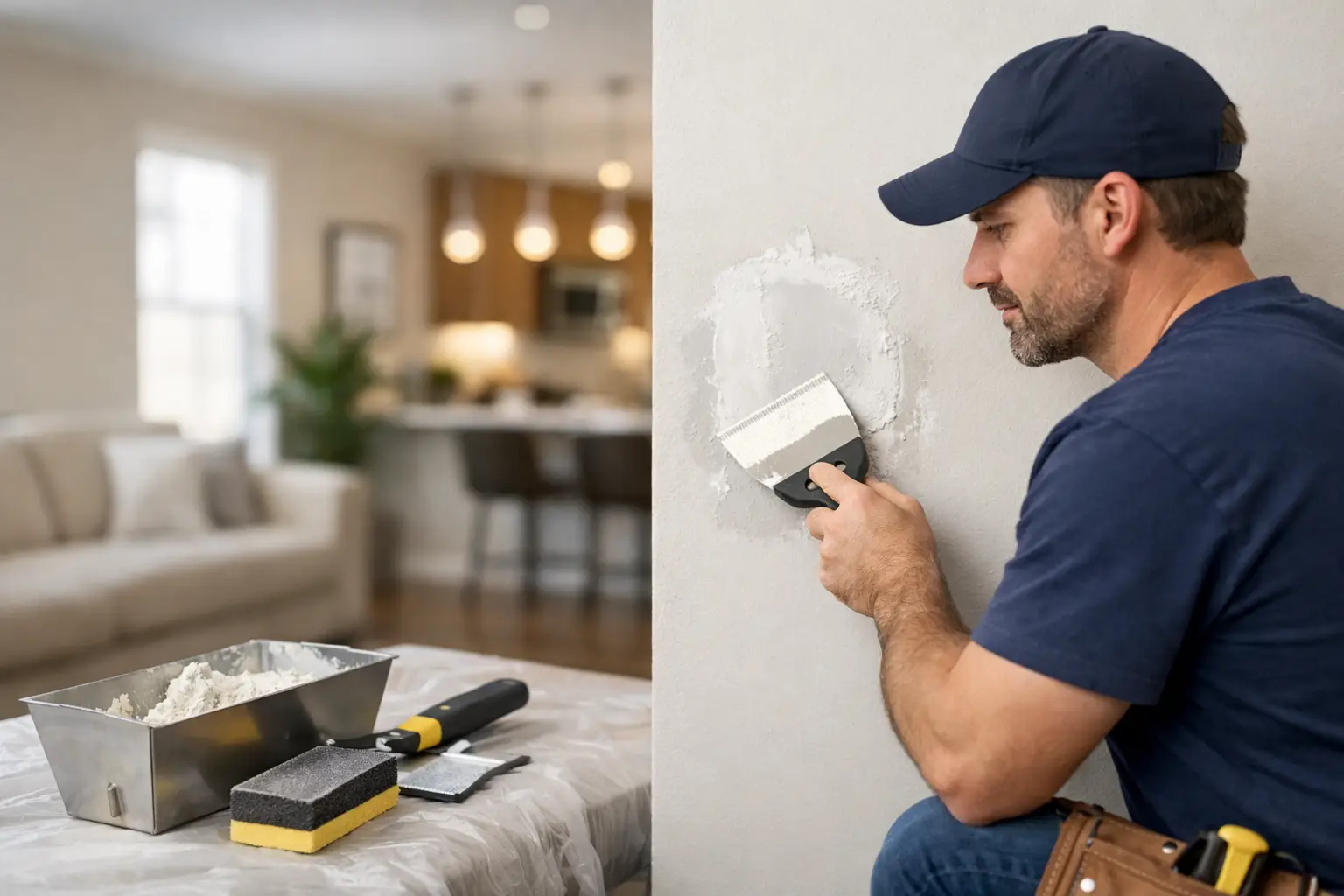
A clean repair involves more than applying compound over the damaged area. Loose material needs to be removed, the backing needs to be stable, and the patch must be built up in thin coats. Each coat is dried, sanded, and feathered farther into the existing wall. That gradual transition is what keeps a repaired area from showing as a raised square after it is painted.
Ceiling repairs require extra care. Gravity works against the repair, and overhead light tends to expose poor sanding or uneven texture. A stain may also point to an active plumbing or roof issue. The source of moisture should be corrected before the drywall is repaired, or the same problem may return.
Small holes versus large holes
Tiny nail holes and shallow dents are usually straightforward touch-ups. A hole left by a door handle, a wall anchor, or an accidental impact may need a mesh patch or solid backing behind the drywall. Larger openings, especially those wider than a hand, generally need a new piece of drywall secured to framing or wood backing before mudding begins.
The repair method depends on where the damage is located. A patch near an outside corner, electrical outlet, doorway, or ceiling joint has different support and finishing needs than damage in the middle of an open wall.
When a Crack Is More Than a Cosmetic Issue
Not every drywall crack means there is a serious structural problem. Calgary homes shift slightly with seasonal temperature changes, dry indoor air, and normal settling. Fine hairline cracks around corners, windows, and door frames are often cosmetic, particularly in newer homes as materials settle.
However, recurring or widening cracks deserve attention. So do cracks that run across a ceiling, appear alongside sticking doors, or return shortly after being repaired. In those cases, patching alone may hide the symptom without addressing movement, moisture, or framing concerns.
Before a repair is booked, take a close look at the area. Check whether the crack is new, whether it has changed, and whether there are water marks, soft drywall, or loose tape nearby. A clear photo and a few details about when the problem started can help determine what work is likely required.
Why DIY Drywall Repairs Often Show Through Paint
There is nothing wrong with handling a few nail holes yourself. A small touch-up can be a practical weekend job when you have matching paint, the right filler, and patience. The challenge begins when the repair is large enough to require multiple coats, sanding, texture matching, or a paint blend across a visible wall.
The most common DIY problem is applying compound too thickly. Thick mud takes longer to dry, can shrink or crack, and leaves a bump that becomes obvious under side lighting. Sanding too aggressively creates another issue: it can expose the patch edge or damage the paper face of surrounding drywall.
Paint also changes the result. Even when the paint colour is correct, a repaired spot can flash differently because of sheen, wall texture, or uneven absorption. In many cases, painting from corner to corner gives a more consistent finish than touching up only the repaired area. It depends on the age of the existing paint, the room lighting, and how visible the wall is.
What a Professional Drywall Repair Visit Should Include
A dependable repair starts with an honest assessment of the damage and the finish you want. If you only need the hole stabilized and patched, the work may be simpler. If you need it paint-ready, texture-matched, or blended with existing colour, that should be discussed at the start.
For a typical repair, the work generally includes preparing the damaged section, securing or replacing broken drywall where needed, applying joint compound in stages, sanding the surface smooth, and keeping the work area tidy. Dust control matters, especially in furnished rooms, bedrooms, and occupied rental units.
Drying time affects scheduling. Some small repairs can be completed in one visit, while deeper patches or texture work may need additional drying time between coats. Fast-setting compounds can help on appropriate jobs, but rushing every repair is not always the best route to a smooth finish. A good handyman will explain the practical options rather than promising an unrealistic result.
For busy households, it also helps to combine related jobs during the same appointment. A damaged wall may come with loose trim, a door that needs adjustment, old caulking, or a paint touch-up elsewhere in the home. One reliable visit can often take care of the small jobs that have been sitting on your list for months.
Drywall Repair Calgary Landlords and Renters Can Plan For
Wall damage can become stressful when a move-out date or tenant turnover is close. Landlords need repairs completed efficiently so a unit is ready for viewing or the next occupant. Renters want to fix accidental damage before a final inspection without making the wall look worse.
Photos taken before work begins are useful for everyone. They document the size and condition of the damage and make it easier to decide whether a simple patch is appropriate. If the wall has been painted several times, finding an exact colour match can be harder than repairing the drywall itself. A paint chip, leftover can, or building colour record can save time.
Condo owners should also consider building rules before scheduling work. Minor interior drywall repair is normally straightforward, but repairs involving a suspected leak, shared plumbing, or work near electrical components may need to be reported to property management first.
How to Prepare Your Home for the Repair
A little preparation helps work move quickly and protects your belongings. Clear pictures, shelves, and furniture away from the damaged wall where possible. If a large item cannot be moved, let the service provider know in advance so the area can be protected properly.
Keep children and pets away from the work zone, particularly during sanding. If the wall contains a television mount, outlet, light switch, or plumbing fixture, mention it when booking. Those details can affect how the wall is opened, reinforced, and finished.
If you have the original paint, set it aside. If not, a professional can often repair the surface so it is ready for painting, then help you decide whether a small touch-up or a full wall repaint makes more sense.
Get the Repair Done Before It Grows
A small hole is easier to fix than a crumbling section of drywall. Loose tape can spread, moisture damage can soften surrounding material, and an unprotected corner can keep getting chipped every time furniture passes by. Dealing with the damage now keeps your home looking cared for and prevents a minor repair from becoming a larger project.
Nestor’s Home Help provides practical, owner-operated help for drywall patches, wall damage, paint-ready repairs, and the other small home jobs that should not have to wait. If your wall needs attention, take a photo, note any signs of moisture or movement, and arrange a repair before the next coat of paint makes the problem harder to ignore.
Vitalii Nestorenko is the owner of Nestor's Home Help, a licensed and insured handyman business in Calgary. He holds a Master's degree in mechanical engineering and does every job himself.