Cabinet Hinge Repair That Keeps Doors Aligned
By Vitalii Nestorenko · October 10, 2026 · 6 min read
A cabinet door that rubs, hangs crooked, or will not stay shut can make an otherwise tidy kitchen feel worn out fast. Cabinet hinge repair is usually a small job, but ignoring it can loosen mounting holes, chip door edges, strain neighbouring doors, and eventually turn a simple adjustment into a replacement project.
The good news is that many hinge problems have a clear cause. A careful inspection can tell you whether the door needs a quick adjustment, new screws, a repaired mounting area, or a new hinge. The key is not forcing the door or tightening random screws until it looks better for a day.
Start by Finding the Actual Problem
Open and close the door slowly while watching the gaps around it. Look at the distance between the door and cabinet frame, as well as the gap between paired doors. A consistent gap is a good sign. A door that sits low on one side, catches another door, springs open, or scrapes the frame needs attention.
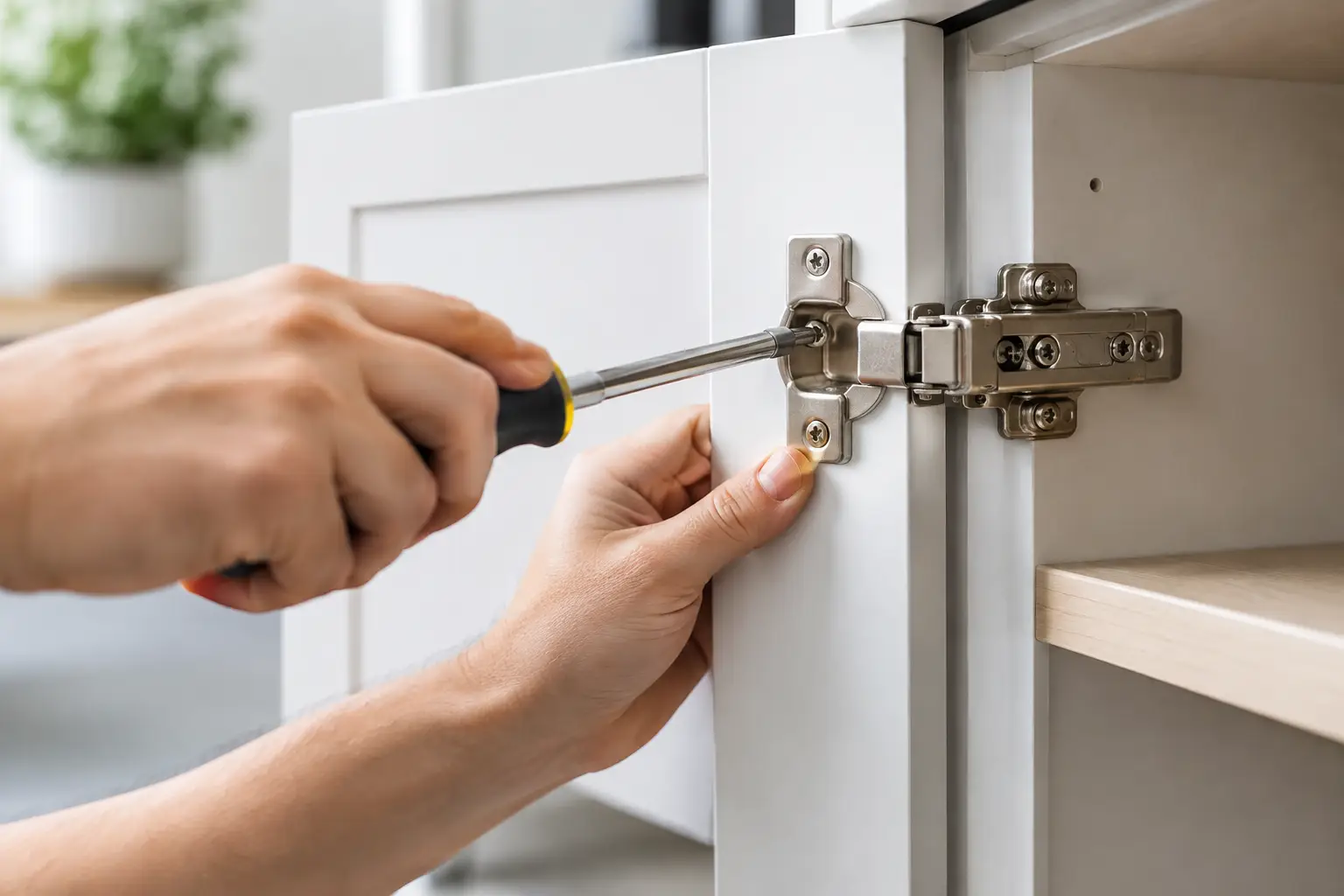
Check the hinge screws first. In many modern cabinets, concealed European-style hinges have screws on the hinge cup inside the door and on the mounting plate attached to the cabinet wall. Older face-frame cabinets may use surface-mounted, semi-concealed, or wraparound hinges. The repair approach changes with the hinge type, so identifying it prevents buying the wrong hardware.
Also look beyond the hinge. A swollen cabinet side, a loose cabinet box, a warped door, or a shelf loaded heavily against the door can create symptoms that look like a hinge issue. In Calgary homes, moisture around kitchen sinks, bathrooms, and laundry areas can swell particleboard or MDF cabinets. A hinge cannot compensate for material that has expanded or crumbled.
Cabinet Hinge Repair Often Starts With Adjustment
Most concealed hinges allow adjustment in three directions. This is why a door that looks badly misaligned can often be corrected without removing it.
Side-to-side adjustment
The side adjustment moves the door left or right. Use it when gaps between doors are uneven or when one door overlaps the cabinet opening too much. On many hinges, the adjustment screw is the one closest to the hinge arm. Turn it a small amount, then close the door and reassess. Adjust both hinges if needed so the door moves evenly.
Up-and-down adjustment
If the door sits too high or too low, loosen the screws holding the mounting plate to the cabinet box just enough to slide the plate. Support the door while you make the change. Retighten the screws firmly, then test the door. This adjustment is often needed after a cabinet has settled or after a door has been removed for painting or cleaning.
In-and-out adjustment
A door that will not close flush, sits too far inside the opening, or sticks out at the top or bottom may need depth adjustment. This moves the door closer to or farther from the cabinet box. Make small changes because an aggressive adjustment can cause the door to bind at the opposite edge.
Work with a screwdriver that fits the screw head properly. A worn Phillips bit can strip cabinet screws quickly. Avoid using a drill at high speed for final tightening, especially in particleboard. Too much torque can strip the hole before you notice it.
When Loose Screws Are the Real Issue
A hinge can feel loose even when the screw head looks tight. The screw may be spinning in an enlarged hole, which means it is no longer gripping solid material. This is common on frequently used kitchen doors, heavy pantry doors, and bathroom vanities exposed to humidity.
For a minor worn hole in solid wood, remove the screw and fill the hole with glued hardwood toothpicks or a small wood dowel. Let the glue dry, trim the material flush, drill a small pilot hole if necessary, and reinstall the screw. The repair works because the new screw has solid wood to bite into.
Particleboard and MDF need more caution. A temporary filler may hold briefly, but badly damaged material can fail again under the repeated pull of a cabinet door. In some cases, a hinge repair plate is the better option. These metal plates spread the load across a larger section of the cabinet or door and give the hinge screws a stable new mounting surface.
If the hinge cup has pulled out of the door, inspect the 35 mm cup hole and the surrounding material. A cracked or soft door edge may need a dedicated repair plate, a door replacement, or a different hinge solution. Simply driving longer screws into damaged engineered wood can split the door or poke through the finished face.
Know When a Hinge Needs Replacement
Not every problem is an adjustment problem. Replace the hinge when it is bent, cracked, rusted, seized, missing a spring, or no longer holds the door in position after the mounting screws are secure. Soft-close hinges can also fail internally. A failed soft-close mechanism may slam, click, or stop pulling the door closed.
Take one existing hinge with you when matching a replacement. Cabinet hinges vary by overlay, opening angle, mounting plate style, cup diameter, and whether the cabinet is frameless or face-frame. A hinge can look nearly identical while placing the door in the wrong position.
Before purchasing, measure the cup diameter, the distance from the cup to the door edge, and the overlay. Overlay is how much the closed door covers the cabinet side or frame. For paired doors, note whether they share a centre partition. These details matter more than the colour or brand name stamped on the hinge.
Replacing one hinge is often enough if the rest are in good condition. On a heavy or frequently used door, replacing both hinges at the same time can provide more consistent movement. It depends on the age of the hardware and whether matching hinges are still available.
Common Mistakes That Make Cabinet Doors Worse
The fastest way to turn a minor repair into frustration is adjusting several screws at once. Make one small change, close the door, and see what moved. Take a photo before starting if you are unfamiliar with the hinge layout.
Do not use a hinge to pull a warped door straight. The door may close temporarily, but the hinge will stay under tension and loosen again. Likewise, do not overtighten screws in particleboard. Once the threads strip, the repair becomes more involved.
Painting around hinges without removing or masking them can also cause trouble. Paint buildup affects movement and makes future adjustments harder. If you are repainting cabinets, label doors and hinges before removal so each piece returns to its original location.
Finally, pay attention to doors that began rubbing suddenly. A single misaligned door may be a hinge. Several doors shifting at once can point to a cabinet box that has loosened from the wall, a failing fastener, or moisture damage. That situation deserves a closer look before hardware is replaced.
When It Makes Sense to Call for Help
A simple adjustment is a reasonable DIY task if the screws hold, the door is sound, and you can identify the adjustment points. Call for professional help when mounting holes are damaged, cabinet material is swollen, doors need to be rehung after renovation work, or several doors need alignment. It is also a practical choice when you have a growing list of small repairs and would rather have them completed in one visit.
For homeowners, landlords, and busy households in Calgary, Nestor’s Home Help can handle cabinet hinge repair alongside door adjustments, drywall touch-ups, caulking, fixture replacements, and other everyday home tasks. Careful alignment matters because cabinets should close cleanly, look even, and stand up to daily use.
A properly repaired hinge is easy to overlook, which is exactly the point. Your cabinet doors should open smoothly, close without a slam, and line up without a second thought.
Vitalii Nestorenko is the owner of Nestor's Home Help, a licensed and insured handyman business in Calgary. He holds a Master's degree in mechanical engineering and does every job himself.