Toilet Replacement Calgary Homeowners Can Trust
By Vitalii Nestorenko · July 28, 2026 · 6 min read
A toilet that rocks under your hand, refills long after flushing, or leaves water around the base is more than an everyday annoyance. It can waste water, damage flooring, and turn a small bathroom problem into a repair that affects the room below. For toilet replacement Calgary homeowners need done without guesswork, the goal is simple: choose the right unit, install it properly, and leave the bathroom clean and ready to use.
A new toilet is often a practical upgrade, especially in an older Calgary home where worn seals, corroded bolts, and uneven floors can complicate a straightforward swap. The right help saves you from repeat trips to the hardware store, a leaking connection, or the unpleasant surprise of finding damage once the old toilet comes out.
When a Toilet Should Be Replaced Instead of Repaired
Many toilet issues can be repaired. A running toilet may only need a new flapper or fill valve. A weak flush may come from mineral buildup, a poorly adjusted tank level, or an obstruction that can be cleared. These are usually worthwhile repairs when the bowl, tank, and base are otherwise sound.
Replacement makes more sense when the toilet has a crack, persistent leaks, a damaged base, or parts that have become a regular source of trouble. Even a hairline crack in the porcelain can become a serious leak. If water appears around the toilet base after flushing, the wax ring may be failing, but the toilet should also be removed and inspected before assuming a new seal is the only answer.
Age matters too. Older toilets can use far more water per flush than current models. If you are already paying for repair work and want better flushing performance with lower water use, replacement can be the better long-term decision. For a rental property, a dependable modern toilet can also reduce maintenance calls and give tenants a cleaner, more reliable bathroom fixture.
Signs You Should Not Put Off Toilet Replacement Calgary Service
A toilet does not have to be completely unusable before it needs attention. Watch for a toilet that wobbles, stains on the ceiling below a bathroom, recurring odours near the base, visible porcelain cracks, or bolts that are badly rusted and no longer hold the fixture securely.
A wobbling toilet deserves prompt attention. Sometimes the floor is slightly uneven and the toilet simply needs proper shimming and securing. In other cases, movement has broken the seal beneath the toilet or damaged the flange that connects it to the drain pipe. Leaving it loose can allow water to reach the subfloor, which is where a manageable installation can become a larger flooring repair.
It is also wise to act when the shutoff valve will not turn, the supply line is old, or the toilet has been leaking quietly for some time. These are common details that can affect the scope of the job. A careful installer checks them before finishing rather than putting a new toilet onto a weak connection and hoping it holds.
Choosing the Right Replacement Toilet
The best toilet is not always the most expensive model. It needs to fit the bathroom, flush reliably, and suit the people who use it. Before buying, measure the rough-in distance: the space from the finished wall behind the toilet to the centre of the drain opening. A 12-inch rough-in is common, but older homes may have a 10-inch or 14-inch rough-in. Choosing the wrong size can leave the tank too far from the wall or prevent the toilet from fitting at all.
Bowl shape is another practical choice. Round bowls save a little space and can work well in smaller bathrooms. Elongated bowls offer more comfort but extend farther into the room. Measure door swing, vanity clearance, and walking space before deciding.
Height is worth considering as well. Comfort-height toilets sit slightly higher than traditional models and are often easier for taller adults, seniors, or anyone with mobility concerns. Standard-height models may be more comfortable for children or shorter household members. There is no single right answer - it depends on who uses the bathroom most.
Look for a reliable flushing system and a WaterSense-labelled model if water efficiency is a priority. Modern low-flow toilets generally perform much better than older water-saving designs, but flushing performance still varies by model. A unit that needs frequent double flushing is not saving much water or time.
What a Proper Toilet Installation Includes
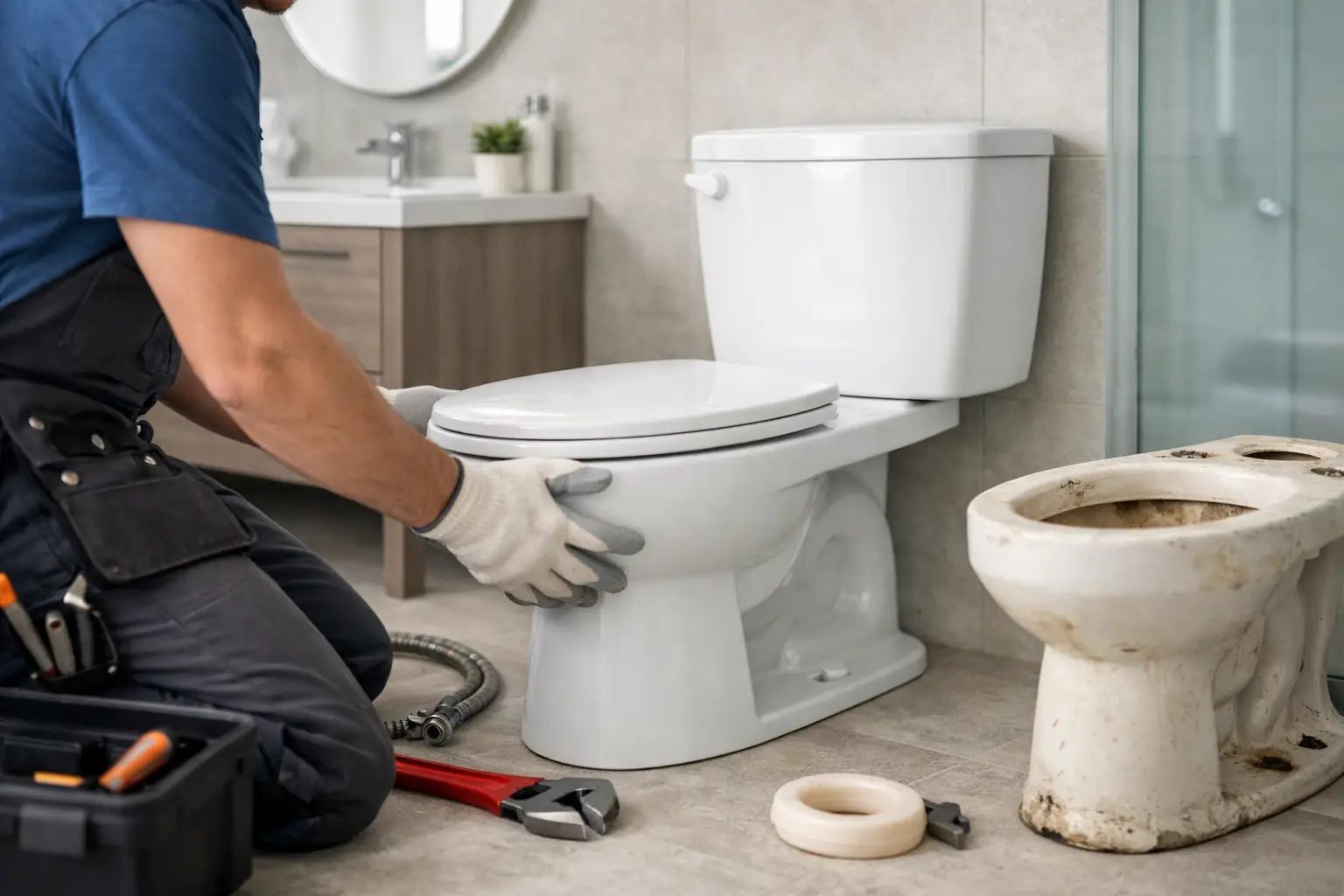
Replacing a toilet involves more than lifting one fixture out and setting another in place. The old toilet must be disconnected, removed carefully, and the floor area inspected. Once the toilet is off, the condition of the flange, bolts, shutoff valve, and supply line becomes visible.
A proper installation starts with a clean, stable mounting surface. The old wax ring is removed, the flange is checked for cracks or improper height, and the new seal is selected for the situation. The toilet is then aligned correctly, lowered without shifting the seal, levelled as needed, and secured without over-tightening the porcelain. Tightening bolts too aggressively can crack the base, while leaving them too loose can allow movement and seal failure.
The tank, if separate, is assembled according to the manufacturer’s instructions. The water supply is connected, the shutoff valve is tested, and the toilet is flushed repeatedly while the installer checks for leaks at the base, tank bolts, supply connection, and drain. The final step is just as important: the bathroom should be left tidy, with the old fixture and job debris removed when disposal is part of the service.
What Can Affect the Cost and Timing
A standard like-for-like replacement is usually the simplest scenario: the new toilet fits the existing rough-in, the flange is sound, the shutoff valve works, and the floor is stable. The work becomes more involved when there is water damage, a broken flange, corroded hardware, a seized valve, or a toilet that was previously installed incorrectly.
The toilet you choose also affects the installation. One-piece toilets can be heavier and more awkward to handle in tight bathrooms. Wall-hung, bidet, smart, and concealed-tank toilets may require electrical work, framing changes, or specialized plumbing work. These upgrades can be excellent choices, but they are not the same as replacing a standard floor-mounted toilet.
If you are renovating, coordinate toilet replacement after flooring and wall finishes are ready. Installing too early can mean removing the toilet again later, while installing after the floor is complete helps ensure the final height and seal are correct.
Avoiding Common DIY Problems
Some homeowners are comfortable changing a toilet themselves, particularly when the existing setup is straightforward. The risks are easy to underestimate, though. The toilet is heavy, porcelain chips easily, and the seal below the fixture cannot be verified by sight once the toilet is in place.
The most common problems are reusing old parts, damaging the flange, choosing the wrong wax ring height, failing to level the toilet, and over-tightening the bolts. Another frequent issue is discovering that the bathroom floor has softened around the base. Covering that problem with a new toilet may hide it for a while, but it will not stop further damage.
For busy households, landlords between tenants, or anyone dealing with a leak, professional help can be the faster option. Nestor’s Home Help provides practical, owner-operated service for toilet replacement and the small repairs that sometimes come with it, including caulking, flooring touch-ups, and debris removal.
A Better Way to Plan Your Replacement
Before booking service or purchasing a toilet, take a few photos of the existing fixture, the shutoff valve, and the floor around the base. Measure the rough-in and available space, then keep the model information and receipt handy. These small details make it easier to confirm that the new unit is suitable and help avoid delays on installation day.
If there is active leaking, turn off the toilet’s shutoff valve if it works and avoid flushing until the source is checked. A dry, secure, properly installed toilet is one of those home repairs you should be able to forget about. That is exactly how it should feel once the work is done.
Vitalii Nestorenko is the owner of Nestor's Home Help, a licensed and insured handyman business in Calgary. He holds a Master's degree in mechanical engineering and does every job himself.