Toilet Replacement Cost: What You’ll Pay
By Vitalii Nestorenko · June 19, 2026 · 7 min read
A toilet can look like a simple swap until the old one comes off and the real condition underneath shows up. That is why toilet replacement cost can range from a quick, straightforward install to a bigger bill that includes floor repair, flange work, or a new supply line.
If you are budgeting for the job, the most useful question is not just, “How much is a new toilet?” It is, “What is included, what could change once the old unit is removed, and what am I paying to avoid later?” A good replacement should leave you with a toilet that sits solid, seals properly, flushes reliably, and does not create hidden water damage behind the scenes.
What affects toilet replacement cost?
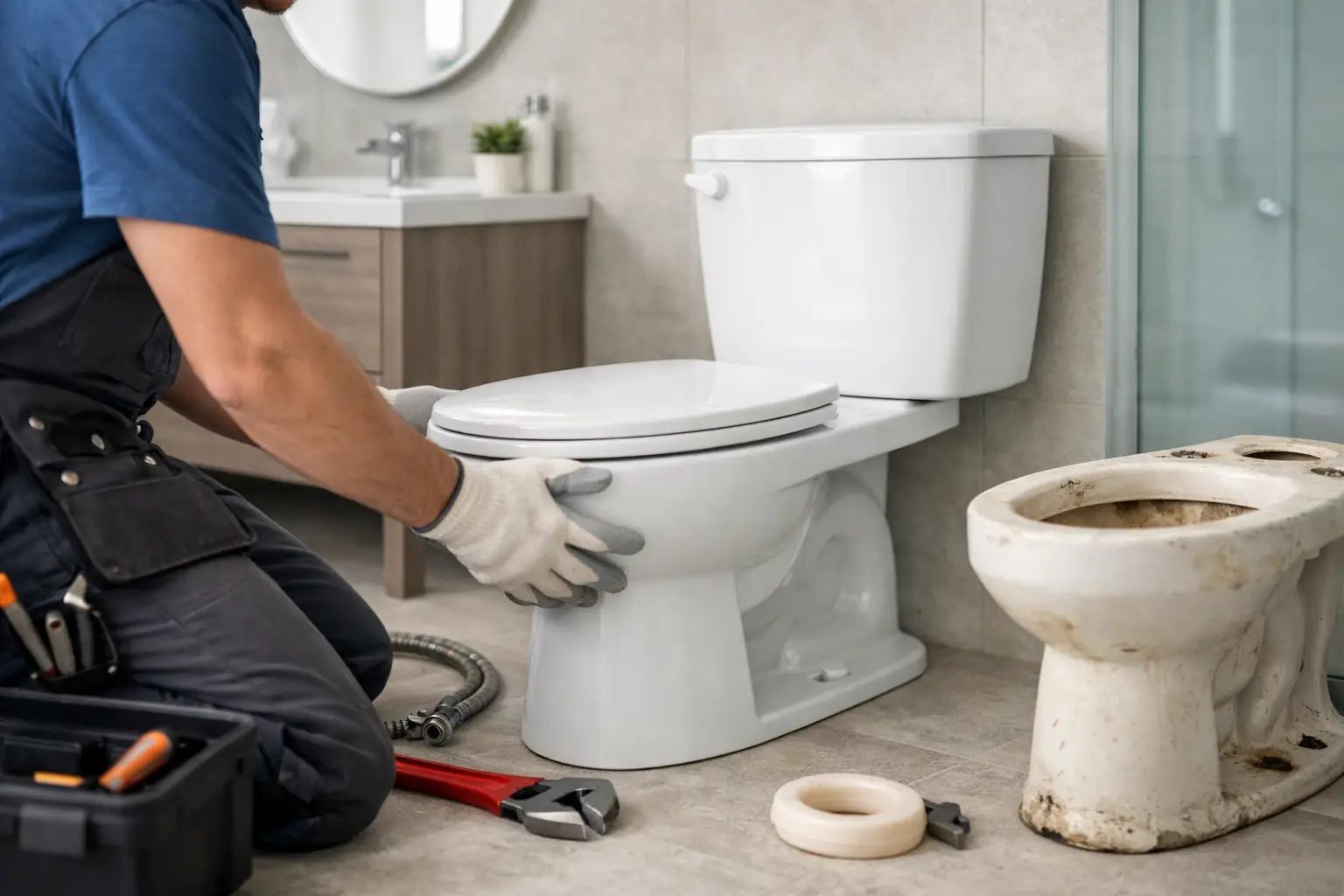
The biggest factor is whether the job is a clean replacement or a problem-solving replacement. If the existing toilet is standard, the shutoff valve works, the flange is in good shape, and the floor around the base is solid, the labour side stays fairly predictable. In that case, you are mainly paying for removal, installation, testing, and disposal if that is part of the service.
Costs start to move when the installer finds issues after lifting the old toilet. A rusted or broken flange, a soft subfloor, an old shutoff that no longer closes properly, or a supply line that should not be reused can all add time and material. None of these are unusual. They are exactly the kind of details that make one toilet job take under an hour and another turn into a half-day repair.
The toilet you choose also matters. A basic two-piece toilet is usually the most budget-friendly option to buy and install. One-piece models often cost more up front and can be heavier to handle. Wall-hung or concealed-tank systems are in a different category entirely and usually involve more labour, more complexity, and more risk if something behind the wall needs attention.
Typical toilet replacement cost in practical terms
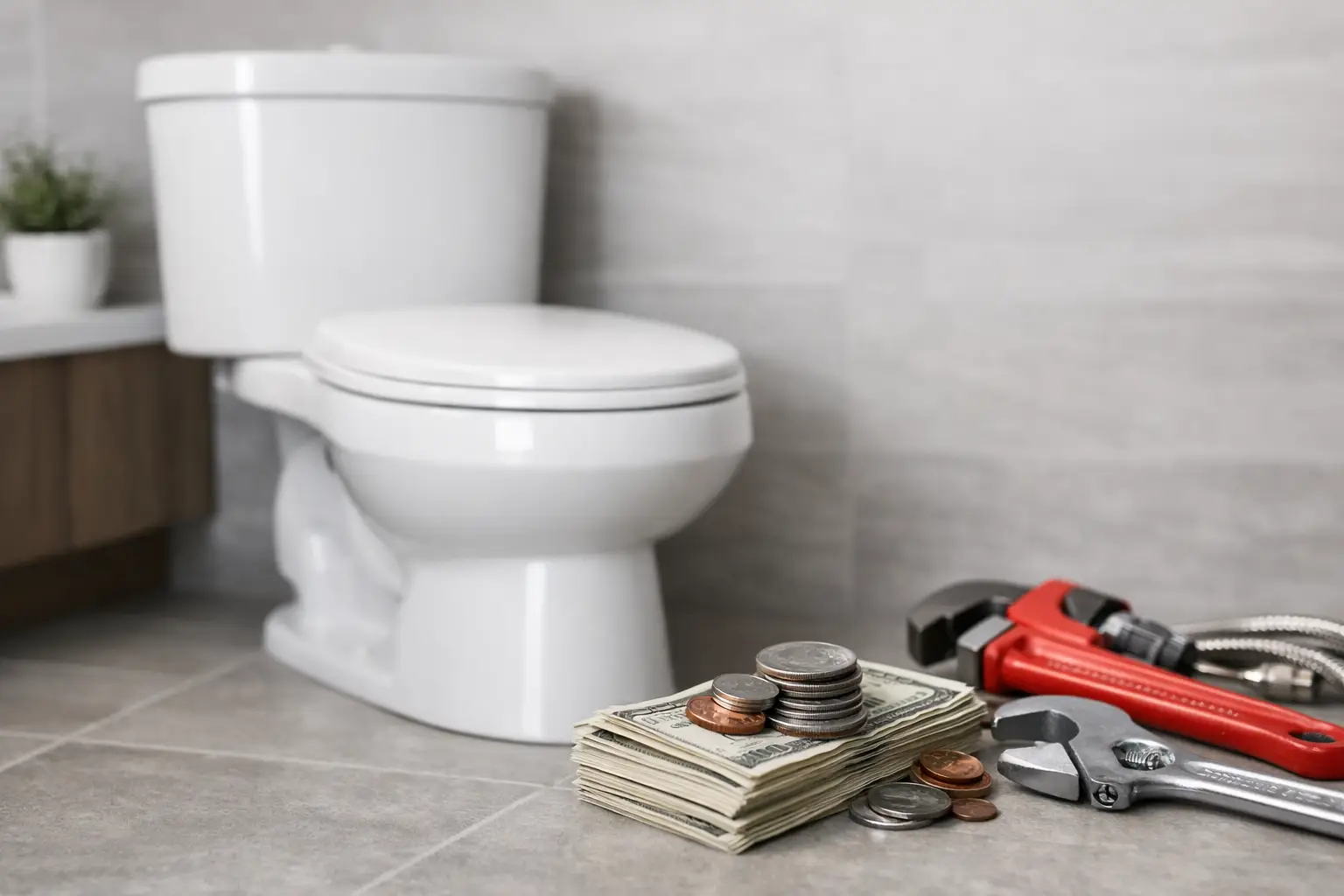
For a standard residential toilet replacement, most homeowners should expect the total cost to include three parts: the new toilet, installation labour, and any small parts needed to complete the job properly. Those parts might include a new wax ring or seal, closet bolts, a braided supply line, and sometimes a new shutoff valve if the old one is unreliable.
A basic toilet itself can be relatively affordable, while premium models with stronger flushing systems, comfort-height bowls, soft-close seats, or water-saving certifications can push the total higher. If you already have the toilet on site, your cost may be mostly labour plus installation materials. If you need the installer to source and bring the fixture, that convenience may be reflected in the price.
In many straightforward cases, homeowners see a total that lands somewhere in the low hundreds to mid hundreds for labour and materials, plus the cost of the toilet. Once repairs are involved, the number can climb quickly. That does not always mean the quote is inflated. Sometimes it simply means the original toilet was not the only problem.
Toilet replacement cost by job type
Straight swap
This is the best-case scenario. The old toilet comes out easily, the flange is sound, the floor is stable, the water shutoff works, and the new toilet fits the existing rough-in. This is the kind of job people hope for, and when everything lines up, it is usually the most cost-effective.
Replacement with minor plumbing updates
Sometimes the toilet itself is not the issue, but the connections are dated. If the shutoff valve is stiff, corroded, or leaking slightly, replacing it during the toilet install is often the smart move. The same goes for an old supply line. These are smaller add-ons, but they improve reliability and reduce the chance of a callback later.
Replacement with flange or floor repair
This is where toilet replacement cost changes the most. A damaged flange can prevent the toilet from sealing correctly. A soft or rotted floor around the base means the toilet may rock, even if the new fixture is installed properly. In these cases, replacing the toilet without fixing the support underneath is just a temporary patch. The better choice is to handle the issue while the toilet is already off.
When replacement makes more sense than repair
If your toilet runs constantly, clogs often, rocks at the base, leaks around the bottom, or simply looks tired, replacement may be the more economical call. Small internal repairs can make sense on a newer toilet. Flappers, fill valves, and handles are inexpensive parts. But if you are dealing with repeated issues on an older unit, it is worth asking how many more service calls you want to pay for.
There is also a water-usage angle. Older toilets tend to use more water per flush than newer models. That does not mean every old toilet must be replaced immediately, but if you are already paying for repairs, upgrading to a more efficient model can make sense over time.
Appearance matters too, especially for landlords preparing a rental or homeowners getting a bathroom ready for sale. A fresh, properly installed toilet is one of those practical updates that improves both function and presentation without turning into a full renovation.
Hidden costs people do not always expect
The most common surprise is disposal. Some services include removal of the old toilet, while others charge separately. It is worth confirming that upfront so the final bill does not catch you off guard.
Another common issue is fit. Not every toilet is a drop-in replacement for every bathroom. Rough-in dimensions need to match. In tighter bathrooms, tank shape and bowl projection matter more than people expect. If the wrong unit is purchased, the labour is still real, and the delay can add cost.
Then there is the condition of the bathroom itself. If flooring was installed tightly around the old toilet or the previous installation was uneven, the base of the new toilet may need shimming or careful adjustment. Done properly, that is normal. Done poorly, it leads to movement, leaks, and frustration.
How to keep toilet replacement cost under control
The best way is to treat the job as more than dropping in a new fixture. Ask what is included. Does the price cover removal of the old toilet, a new seal, new bolts, testing for leaks, cleanup, and haul-away? Will the installer inspect the flange and floor before finishing the job? Those details matter more than a low starting number that leaves out half the work.
It also helps to choose the toilet with the room in mind, not just the price tag. A bargain fixture is not a bargain if it flushes poorly, does not fit comfortably, or creates install complications. A dependable mid-range toilet is often the sweet spot for most homes.
If you are already booking someone for other bathroom or home tasks, bundling small jobs can sometimes make practical sense. For busy households, one reliable visit is often better than coordinating several separate appointments.
Should you replace a toilet yourself?
Some homeowners can handle a basic swap, but the risk is rarely in setting the new toilet down. The risk is in missing what is underneath. A toilet that seems installed fine can still leak slowly at the base, damage flooring, or wobble because the flange was compromised from the start.
There is also the question of time. For someone with the right tools and experience, it may be manageable. For a busy homeowner, landlord, or renter coordinating with a property owner, the value of having it done properly and quickly is often worth the labour cost. That is especially true when the bathroom only has one toilet or the issue is already urgent.
What a good replacement service should include
A proper install should feel straightforward from your side. The old toilet is removed carefully, the area is inspected, the new unit is installed level and secure, connections are replaced as needed, and everything is tested before the job is considered done. Cleanliness matters too. This is bathroom work. No one wants a mess left behind.
That hands-on, accountable approach is what many homeowners are really paying for. Not just a fixture swap, but peace of mind that the toilet is sealed, stable, and ready for daily use. For customers in Calgary and nearby communities, that is often the difference between a quick fix and a repair done right the first time.
If you are trying to judge toilet replacement cost, think beyond the price of the toilet sitting on the store shelf. The real value is in getting a reliable installation, catching hidden issues early, and ending the day with one less thing to worry about.
Vitalii Nestorenko is the owner of Nestor's Home Help, a licensed and insured handyman business in Calgary. He holds a Master's degree in mechanical engineering and does every job himself.