Wall Anchors Versus Studs: What Holds Best?
By Vitalii Nestorenko · October 20, 2026 · 7 min read
A shelf that pulls out of drywall can leave more than a few holes to patch. It can damage the wall, break what was mounted, and create a real safety issue if a TV or heavy mirror comes down. When deciding between wall anchors versus studs, the right answer depends on the item’s weight, how it will be used, and what is actually behind the wall.
For most homeowners and renters, the goal is simple: install it once, know it is secure, and avoid repairing drywall later. Here is how to make the call before you drill.
Wall Anchors Versus Studs: The Key Difference
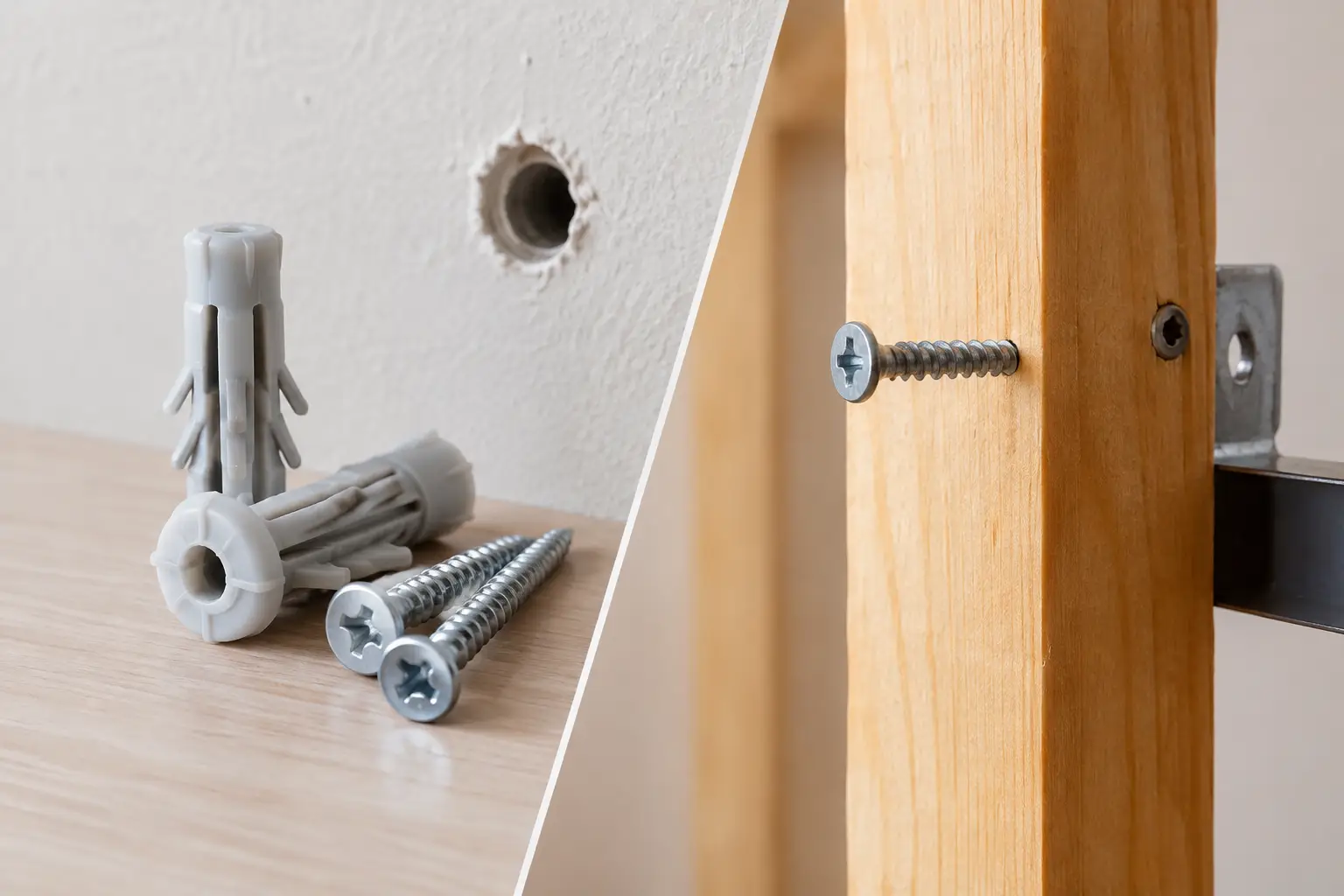
A stud is a vertical framing member behind the drywall. In many Calgary homes, studs are wood, although steel studs are common in some condos, basements, and newer construction. Fastening directly into a wood stud gives a screw solid material to grip, making it the preferred mounting point for heavy or high-use items.
A wall anchor works differently. It grips the drywall itself, spreading the load over a larger area or clamping behind the wall. Anchors are useful when a stud is not in the exact location you need, such as mounting a small picture, curtain rod bracket, or narrow shelf between studs.
Neither option is automatically better. A properly selected and correctly installed anchor can hold a useful amount of weight. But anchors have limits, and the ratings on the package assume ideal drywall, a properly drilled hole, and a load that stays fairly still. Real-world use is often less forgiving.
When a Stud Is the Better Choice
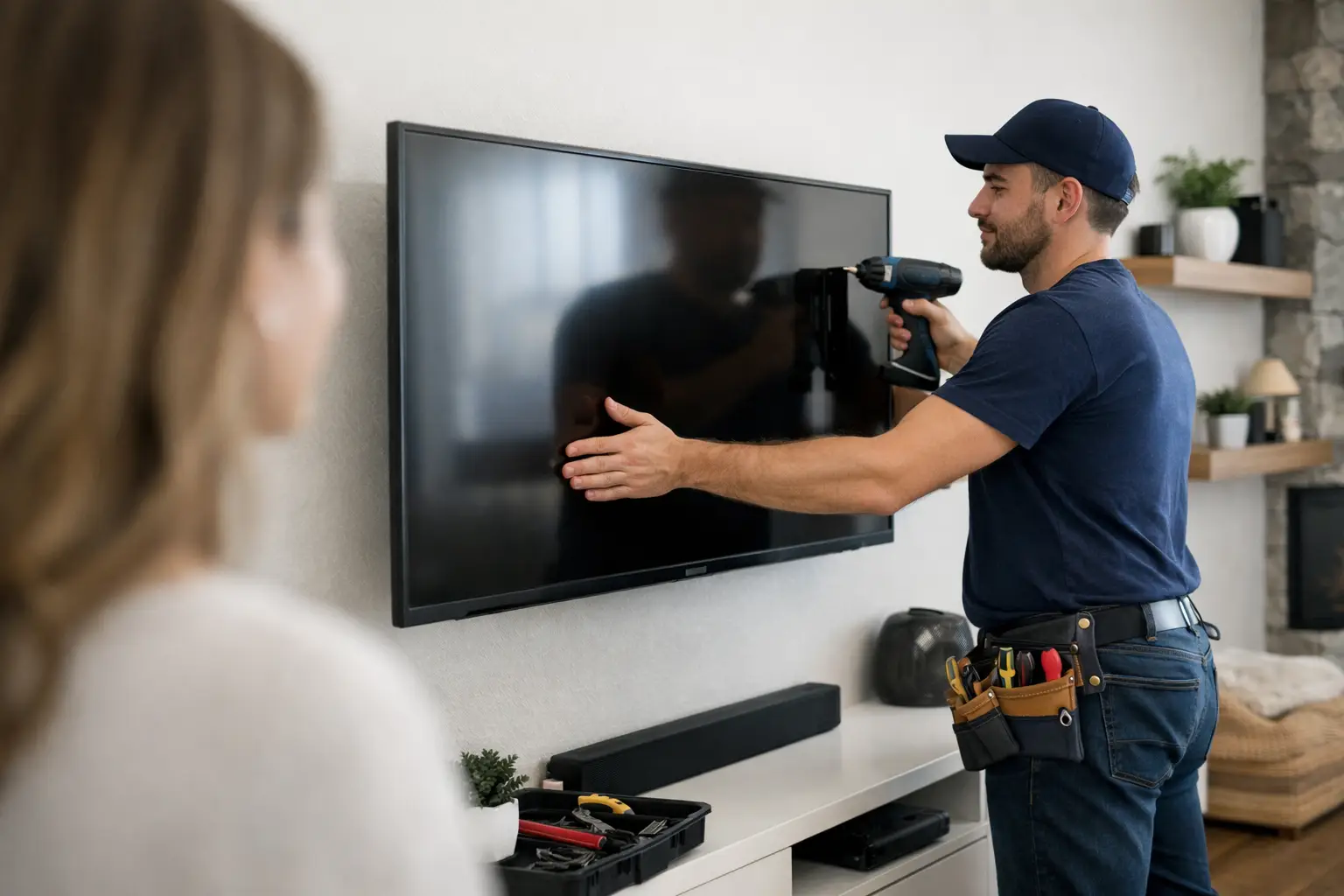
Use studs whenever you are mounting anything heavy, valuable, frequently handled, or capable of causing injury if it falls. TV mounts are the clearest example. Even if an anchor claims a high weight rating, a television creates leverage when the mount extends or swivels. That force is very different from a fixed picture frame sitting flat against the wall.
Studs are also the right choice for wall-mounted cabinets, large floating shelves, heavy mirrors, grab bars, coat racks carrying winter gear, and curtain rods supporting wide or heavy drapes. A stud-mounted fastener has a much larger safety margin than drywall alone.
For a standard fixed TV mount, at least two lag bolts or structural screws should fasten into studs whenever the mounting plate design allows it. With a larger television or a full-motion mount, the mounting pattern and hardware matter just as much as finding the stud. The bracket must be level, the screws must penetrate the stud deeply enough, and the wall must be inspected for electrical wiring and plumbing before drilling.
Studs are typically spaced 16 inches on centre, though 24-inch spacing is also common. A stud finder is helpful, but it is not foolproof. Confirm the stud location by checking for multiple readings across a vertical line, using a small test hole where it will be covered, or locating known fasteners in the drywall. Do not assume every strong reading is framing. Metal corner bead, ductwork, pipes, and wiring can confuse a scanner.
Wood studs and steel studs are not the same
A wood stud can usually accept suitable wood screws, structural screws, or lag screws. Steel studs require a different plan. Light-gauge steel studs are not designed to carry the same concentrated loads as wood framing, especially for a cantilevered TV mount or a large shelf.
For light items, a rated toggle-style anchor may be appropriate in drywall near steel framing. For a heavy installation, consider adding a mounting plate, opening the wall for proper blocking, or choosing a different location. Driving a large screw into thin steel and hoping for the best is not a safe mounting method.
When Wall Anchors Make Sense
Wall anchors are practical for lightweight and moderate-duty items when a stud is unavailable or poorly positioned. They are especially useful for decorative mirrors, small shelving, towel bars, paper holders, smoke detector replacements, framed art, and compact wall organizers.
The best anchor depends on the load and the wall material. Basic plastic expansion anchors are common, but they are best reserved for very light-duty work. Self-drilling drywall anchors can work for light to moderate loads, provided the drywall is sound and the anchor is not overtightened. Toggle bolts and strap toggles generally offer the strongest drywall-only support because they clamp against the back of the drywall.
Anchor ratings should be treated as a guide, not a promise. The actual capacity may be lower if the drywall is older, damp, cracked, double-layered, or already repaired. A shelf loaded with books can also place outward pulling force on the fasteners, not just downward weight. If the item will be bumped, pulled, or loaded over time, choose a stronger mounting method than the minimum rating suggests.
A good rule is to use anchors for items that are light enough to replace without worry, and studs for items you would not want landing on a person, pet, countertop, or hardwood floor.
Weight Is Only Part of the Decision
Two items can weigh the same and need completely different installation methods. A 25-pound mirror hanging close to the wall may be fine on two quality anchors, depending on its hardware and drywall condition. A 25-pound floating shelf can put much more stress on the wall because its contents sit away from the mounting surface.
Think about these practical factors before choosing hardware:
- Movement: Doors, pull-out shelves, full-motion TV mounts, and hooks are repeatedly tugged and create changing force.
- Leverage: The farther an item projects from the wall, the more force it applies to the fasteners.
- Load changes: A shelf may be empty today and packed with books next month.
- Wall condition: Soft, damaged, patched, or water-affected drywall cannot be trusted like clean, solid drywall.
- Mounting hardware: The wall bracket, screws, and hangers need to be rated for the job too.
This is why “the anchor holds 75 pounds” does not settle the question. The number does not account for every wall, every bracket, or every type of use.
Common Mistakes That Cause Loose Mounts
The most common mistake is drilling a hole that is too large for the anchor. An anchor needs a snug fit to grip properly. If it spins in the hole before the screw is installed, stop and move to a larger anchor or a new location. Do not fill the hole with toothpicks, glue, or drywall compound and expect it to carry weight.
Another problem is overtightening. Cranking a screw down can crush drywall, strip an anchor, or pull a toggle against a weakened area. Tighten the hardware until the bracket is secure and flush, then check that it does not rock or shift.
People also mount too close to the edge of a wall, near an old patch, or beside an electrical box without checking what is behind the drywall. Use caution around outlets, switches, plumbing fixtures, and exterior walls. Wiring can run vertically and horizontally from electrical boxes, and plumbing locations are not always obvious.
Finally, do not rely on one fastener for an item with a wide mounting plate. Use all manufacturer-recommended fastening points where possible. Spreading the load makes the installation safer and helps keep the item level over time.
A Safer Plan for TVs, Shelves, and Heavy Mirrors
For a TV, first identify the wall type, find the studs, and check whether the mount requires one or two stud locations. If the studs do not line up with the viewing position you want, a properly designed mounting solution may be needed rather than forcing the mount onto drywall anchors.
For shelves, look at both the shelf’s stated capacity and the bracket design. Brackets should land on studs when the shelf is long, deep, or intended for books, kitchenware, tools, or decor that may grow over time. Small display shelves may work with quality toggle anchors, but use conservative judgment.
For a heavy mirror, use the mounting hardware specified by the manufacturer. A French cleat or wide rail can distribute weight better than a single wire hanger. If the mirror has two D-rings, use two properly placed fasteners so it cannot shift or twist.
When the wall layout, weight, or hidden conditions are unclear, getting the mounting assessed before drilling is usually cheaper than repairing damaged drywall afterward. Nestor’s Home Help can help with secure TV mounting, shelves, mirrors, and other everyday installations across Calgary and nearby communities.
A secure wall mount should feel uneventful: level, solid, and quietly dependable. If you have to question whether the drywall alone can carry it, that is usually your sign to find a stud, upgrade the mounting method, or ask for a professional hand.
Vitalii Nestorenko is the owner of Nestor's Home Help, a licensed and insured handyman business in Calgary. He holds a Master's degree in mechanical engineering and does every job himself.